
Knee Injury? You Can Still Get a Great Cardio Workout
-
Andra Picincu
One of the problems I see most often when I talk to clients about knee injuries isn’t the injury itself. It’s what happens afterward.
Maybe you’ve got a meniscus or ACL tear. Or perhaps it’s an MCL sprain, bursitis, or patellar tendinitis. In any of these instances, running is suddenly off the table. Even cycling and other forms of low-impact cardio for bad knees are often off limits.
You can probably still lift weights, but getting your heart rate up and breaking a sweat? That’s where things get tricky.
Luckily, you don’t have to give up on cardio while your knee heals. You just need to rethink what “cardio” looks like for you.
Here’s what’s actually safe, what to avoid, and how to keep your cardiovascular fitness up without pushing through pain.
It’s Not Just Your Knee That Takes the Hit
Knee injuries have a way of keeping you guessing. The pain comes and goes, often when you least expect it. You could be taking a slow walk and suddenly feel your knee give out, or climb a few flights of stairs without any issue at all.
That unpredictability is part of what makes recovery so frustrating—you never quite know what you’re dealing with on any given day. So, you start doing less. Then less again.
While giving your knee time to heal is important, prolonged inactivity can create a domino effect.
You lose strength, cardiovascular fitness, and confidence in your body. Your mobility may decline, your weight may creep up, and the longer you stay away from the activities you love, the harder it becomes to feel like yourself again.
Research confirms that lower limb injuries have far-ranging consequences beyond pain. One example is weight gain, which can affect just about every aspect of your health.
- In one study, 75 of 183 participants who sustained an ACL rupture were, on average, 8.8 kilograms (19.4 lbs.) heavier five years later—and 75% of them were overweight or obese.
- Another study found that while most patients lose weight (mostly muscle) in the first few weeks after total knee arthroplasty, they gain an average of 6.3 kilograms (14 lbs.) within two years.
That’s particularly concerning in people who have already had one knee replaced, given the risk of eventually needing surgery on the other side. Between 35% and 50% undergo contralateral knee replacement within 10 years, according to researcher Lynn Snyder-Mackler of the University of Delaware.
- A third study found similar patterns after lower limb fractures: 75% of patients gained an average of 4 kilograms (8.8 lbs.) within 18 months, and nearly half reported significant emotional distress over the change. Only 37% felt they’d returned to their previous activity level by the final follow-up.
And then there’s the part that doesn’t show up on the scale.
When movement becomes difficult, it’s easy to feel frustrated, anxious, or discouraged. You may miss your usual walks, runs, gym sessions, or simply the feeling of being able to move without thinking about your knee. For some people, that loss of independence and routine can take a real psychological toll.
I’m not saying cardio will solve all of this. It won’t heal a torn meniscus or repair an ACL. But maintaining some form of cardiovascular activity, when your injury and rehab plan allow it, can help you preserve an important part of your fitness during recovery.
Most importantly, it can give you a sense of normality at a time when so much else feels restricted. Something that feels like progress instead of standing still.
How to Do Cardio with a Knee Injury
Daily cardio isn’t harmful to your knees, as long as you vary your workouts and don’t overdo it.
Take stationary cycling, for example. It’s safe and often recommended, even for people recovering from knee injuries. But cycling every day, especially at high resistance or intensity, can stress the knee joint and surrounding tissues.
To keep things simple, the best cardio for bad knees is any exercise that raises your heart rate without aggravating your injury. Low-impact activities like cycling, swimming, rowing, and brisk walking are safest, but even these should be adjusted to your fitness level and how your knee responds to the movement.
Before you get started, keep a few things in mind:
- Warm up longer than you think you need to: Cold, stiff joints are more vulnerable to strain. Spend 5-10 minutes on gentle movement (e.g., a slow walk or easy pedaling) before increasing intensity, even if you feel fine.
- Start small: An exercise may feel fine for 10 minutes but become irritating after 30. Start short and increase the duration gradually.
- Change one variable at a time: Increase the duration, resistance, speed, or training frequency—not all four at once. This makes it much easier to identify what your knee tolerates.
- Control the resistance, not just the duration: On a bike, elliptical, or rowing machine, adding resistance can substantially increase the load on your knee even if the movement feels low-impact. Crank up the resistance gradually while paying attention to any signs of pain or discomfort.
- Adjust your range of motion (ROM): When you have a knee injury, you may not be able to achieve full range of motion—and that’s OK. Adjust the seat, stride, or movement depth to find a range your knee tolerates well.
- Keep your knee tracking naturally: Avoid letting your knee collapse inward or drift into an awkward position, particularly when fatigue sets in. Good alignment becomes harder to maintain when you’re tired, so reduce the intensity if needed.
- Watch for swelling: Pain isn’t always the first warning sign. If your knee looks or feels puffier after a workout, that’s your body telling you to scale back next time.
- Follow the 24-hour rule: Knee pain may not show up until the day after a workout. If you’re unsure whether an activity is too much, pay attention to how your knee feels that evening and the following morning.
- Avoid stopping and starting abruptly: Sudden stops, quick direction changes, or jumping off equipment mid-motion can place unnecessary stress on an injured knee. Slow your pace gradually instead of coming to an abrupt halt.
- Alternate your cardio: Find three or four knee-friendly cardio exercises you enjoy and can fit into your routine, then alternate between them.
For example, you could walk on a treadmill for 10 minutes, row for another 10 minutes, and finish with 10-15 minutes of indoor cycling. The goal is to give your knee a break from repetitive strain while still keeping your fitness up.
- Pay attention to footwear: Even indoors, worn-out or poorly fitting shoes can affect how you move. If you’ve been using the same pair for a long time, check that they’re still providing the support and stability you need.
Most importantly, focus on what you can do rather than what you can’t.
Don’t chase your pre-injury pace or fitness level. Trying to hit the same speed, resistance, or duration you had before the injury will only cause frustration or, even worse, more pain.
Your knee may need a different kind of training right now. That doesn’t mean your whole body has to stop moving. Cardiovascular exercise still counts even when you’re not pushing to your normal limits.
Low-Impact Cardio for Bad Knees: Which Machines Can You Use?
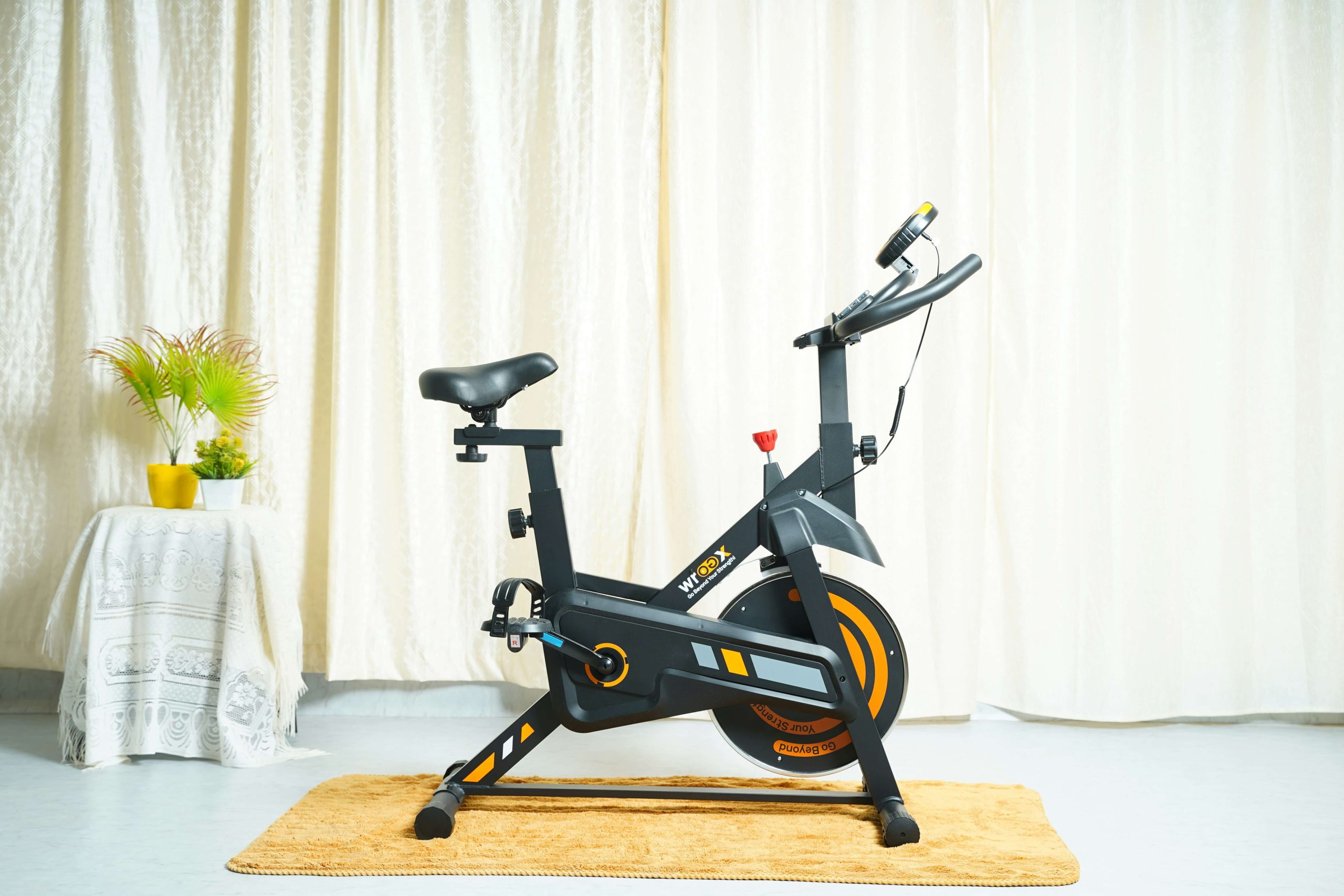
To date, I’ve had three meniscus tears, along with some ACL issues. While my rehab program varied each time, one thing remained constant: cycling on a stationary or spin bike. My physical therapist gave me the green light to cycle indoors even during the early, acute phase of the injury.
That doesn’t mean cycling is the best cardio for bad knees. But if your injury allows it, it can be a safe way to get your heart rate up without the impact of running or jumping.
The key is to start small. Try 10–15 minutes at low resistance and see how your knee responds. If everything goes well, increase the duration and resistance over the following weeks.
An even gentler option is the recumbent bike, where the reclined seating position reduces pressure on the knee joint compared to an upright bike. If you prefer the latter, keep the seat height slightly higher than usual. A seat that’s too low increases knee flexion and strain with every pedal stroke.
A few other knee-friendly cardio machines worth trying:
Rowing Machine
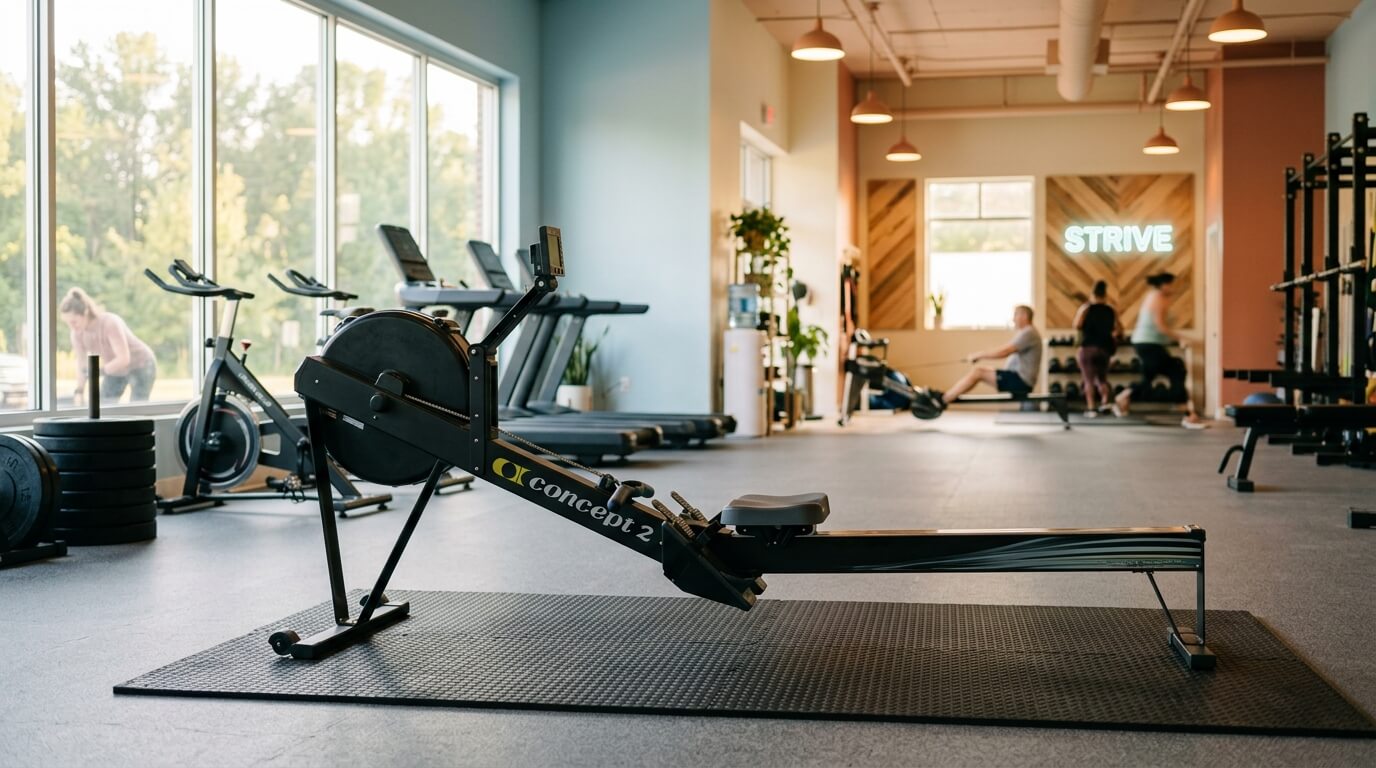 The rowing machine is excellent for cardiovascular fitness, with minimal impact on the knee joint. To stay safe, avoid overbending the knee at the catch position (the front of the stroke) and perform the movement in a slow, controlled manner.
If you have lower back pain, like I do, foam rolling afterward, while your muscles are still warm, can help ease tension and improve your mobility. Sometimes, the relief is immediate. See this guide on foam rolling for back pain to find out more.
Curved Treadmill
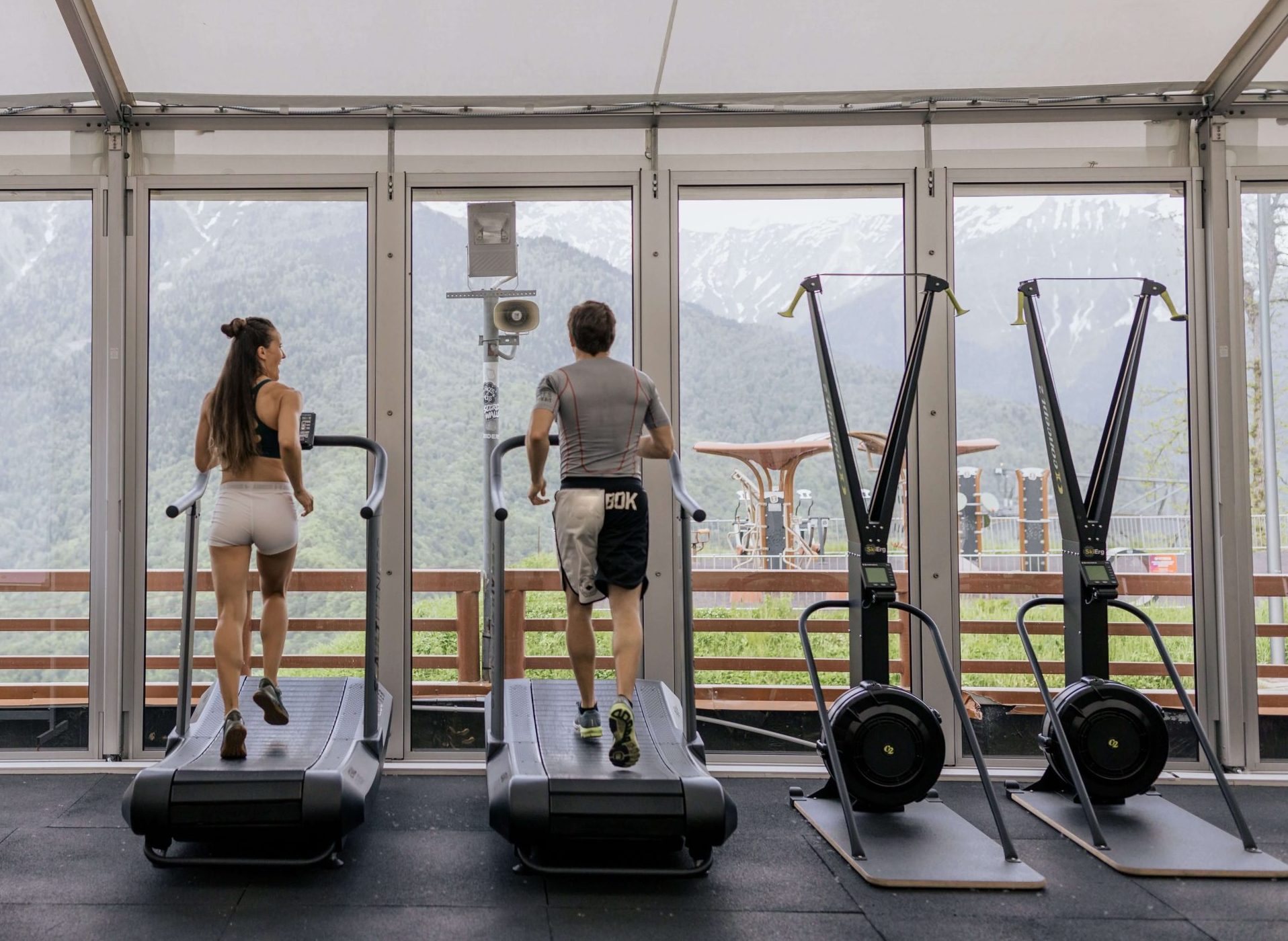 The curved treadmill is my go-to whenever my clients or I are dealing with knee pain. Its rubberized slats and curved design offer better shock absorption than a standard treadmill, while the self-powered belt lets you control your pace naturally without relying on a motor to speed up or slow down.
The curved design also encourages a more natural walking or running stride, which many people find comfortable. Plus, it shifts more of the workload to your glutes and hamstrings rather than your quads and knees.
But don’t assume that a curved treadmill is automatically easier on an injured knee. If walking itself is painful, using the treadmill won’t magically make it pain-free.
Start with a slow walk and see how your knee responds before increasing the pace or duration.
Standard Treadmill
Set the incline low and, if possible, use a treadmill with a cushioned, rounded mechanical belt. Walk slowly and increase your pace gradually. You can even add some light intervals by alternating 30 seconds at a slower pace with 30 seconds at a slightly faster pace.
“Incline walking can strengthen leg muscles while introducing less joint load or pressure to the knee,” explains Ball State exercise science professor Henry Wang. The key is choosing a gentle incline (3–8%) and keeping your stride short and controlled.
Elliptical Trainer
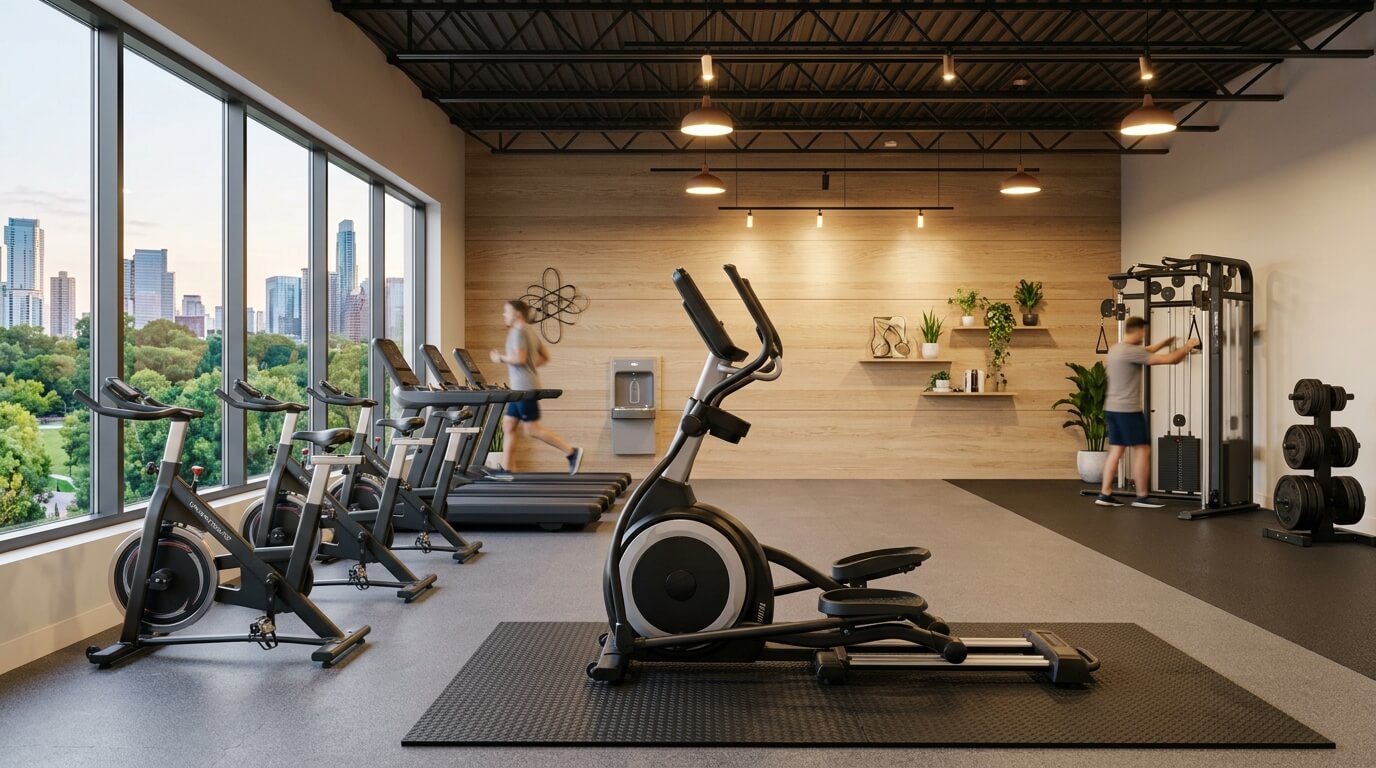 The elliptical is more of a hit-or-miss. Although the machine is low-impact, its fixed foot path can feel unnatural for some people. This may be particularly noticeable if you have a meniscus tear or another injury that makes repetitive knee flexion uncomfortable, potentially causing catching, pinching, or pain.
So, should you use an elliptical for bad knees? It really depends on the machine and how your knee responds to the movement. Start slowly, keep the resistance low, and see how it goes. If it feels awkward, there’s no reason to force it. A bike or rowing machine may be a better option.
Personally, I’m not a fan, but plenty of my clients find it comfortable.
Upright SkiErg
The SkiErg can be a great choice because the movement is driven primarily by your upper body and core, with minimal knee flexion involved. It’s a solid way to keep your heart rate up and maintain cardiovascular fitness while giving your knees a break from load-bearing work.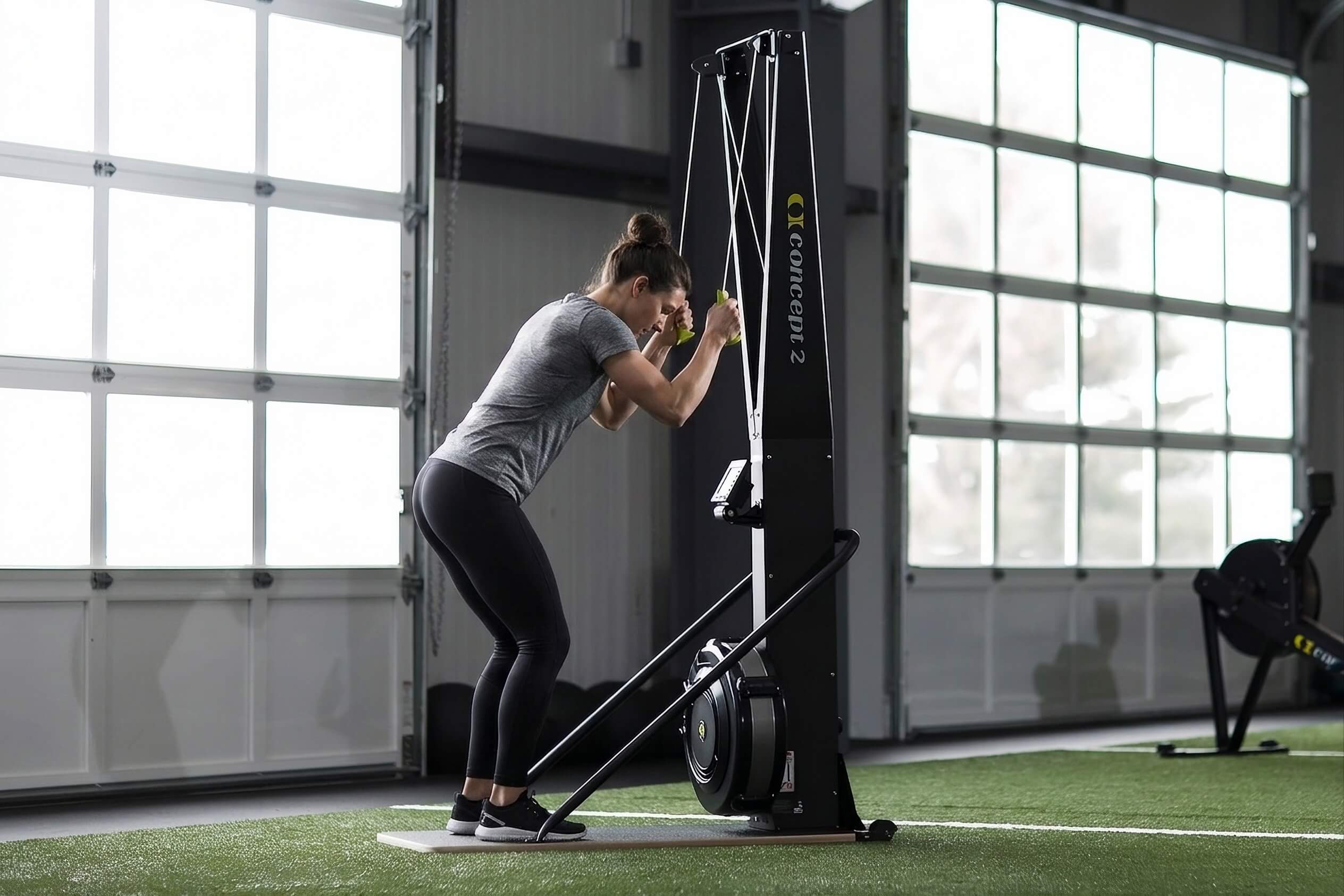
Stair Climber
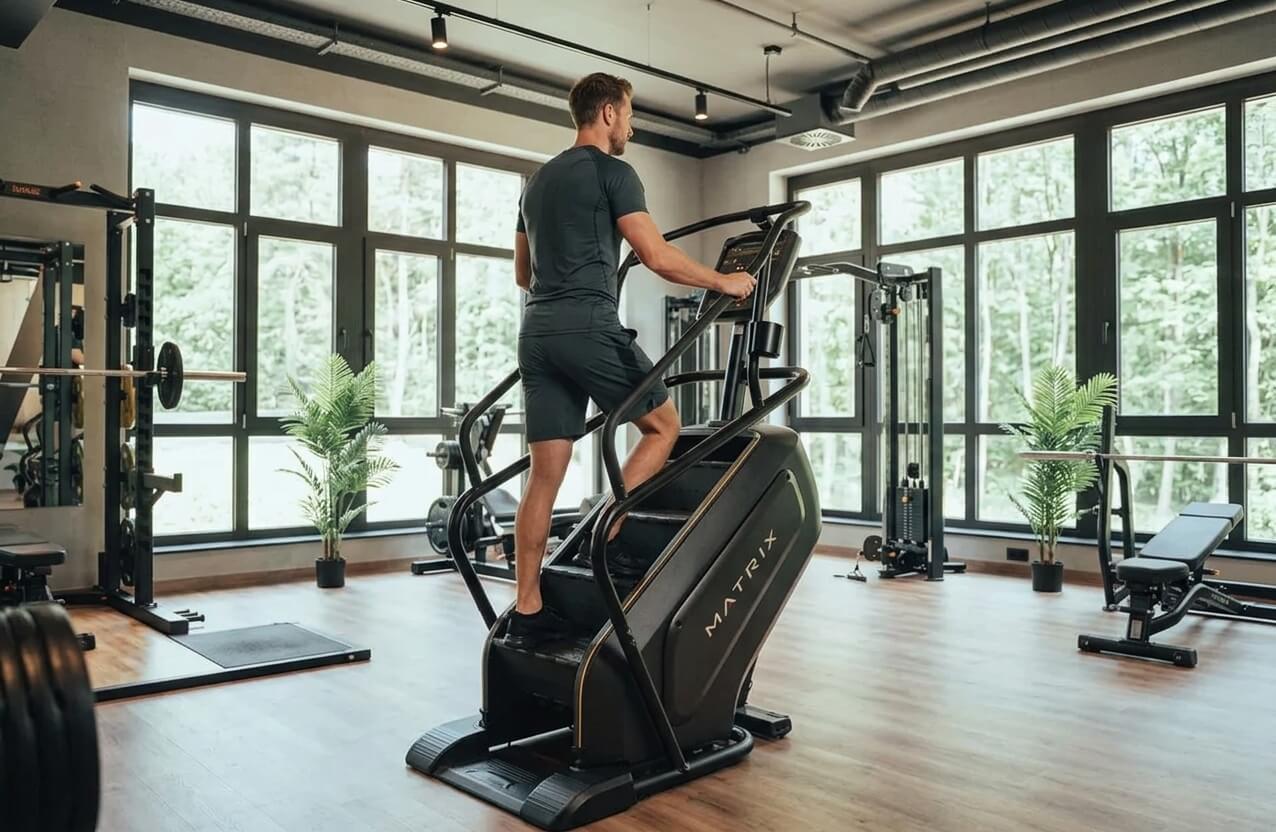 The stair climber is one of the most demanding options for injured knees due to the repetitive deep bending involved. Surprisingly, though, many people find it more comfortable than walking on a treadmill or cycling.
If you decide to give it a try, I’d recommend capping it at 10-15 minutes. That’s plenty of time to activate your quads, glutes, and hamstrings and get your heart pumping without overstressing your knees. Continue with another 10-15 minutes of cycling or another gentler cardio option.
The Best Cardio Machine Is the One Your Knee Tolerates
There isn’t a single machine that’s safe for every knee injury. Your best option depends on three things:
- The machine itself: Its design, range of motion, resistance, and setup can all affect how your knee feels.
- Your injury: A torn meniscus, ACL injury, tendinopathy, and arthritis don’t necessarily respond to the same movements.
- Your knee that day: Symptoms can fluctuate. An exercise that feels perfectly fine one day may irritate your knee the next.
☝ That’s why I recommend having at least one backup option for your usual cardio.
If the spin bike feels great today, use it. If your knee doesn’t like it tomorrow, switch to the rowing machine, SkiErg, or another option you’ve already established that you tolerate well.
Think of it less as finding the perfect cardio machine and more as building a small toolbox of knee-friendly cardio options you can rotate based on how your knee feels.
No Equipment? You Can Still Get Your Cardio In
Not everyone enjoys going to the gym—and even if you do, sometimes you just want a change of scenery. You might be tired, short on time, or simply prefer to exercise at home. Or perhaps you’d rather get your cardio through activities you actually enjoy, such as swimming or horseback riding.
But which activities are appropriate when your knee hurts? And can you get a decent cardio workout at home without making your symptoms worse?
It really comes down to your preferences and the injury you’re dealing with. That said, here are some knee-friendly cardio exercises you can do at home, outdoors, or in the pool:
- Walking: Stick to flat, even terrain when possible. Uneven surfaces, like trails or cobblestones, force your knee to stabilize in unpredictable ways, which can aggravate certain injuries. If your knee starts hurting, slow down or take a break rather than trying to push through it.
- Walking with poles (Nordic walking): Poles help offload some of the weight from your lower body with each step, making longer walks more comfortable if your knee tends to fatigue.
- Swimming: One of the most knee-friendly cardio options out there since water supports your body weight. Freestyle and backstroke tend to be gentler on the knees than breaststroke, which involves a whipping motion that can strain the joint.
- Water aerobics or water walking: A great alternative if swimming laps feels too intense. The water’s resistance builds cardiovascular fitness while the buoyancy takes pressure off your knee.
- Cycling outdoors: Start with flat terrain, low resistance, and shorter distances before progressing. Avoid standing climbs, which put extra load through the knee.
- Dancing (low-impact styles): Ballroom dancing, slow-paced line dancing, and other low-impact styles can be a fun way to get your heart rate up. Avoid movements involving jumps, deep knee bends, or quick directional changes.
I’d also add horseback riding to this list, but with a caveat: it really depends on how your knee responds. Although riding is relatively low-impact compared to running or jumping, it still requires your knees to grip and stabilize your body, which can aggravate certain injuries.
I ride once a week or every other week, and my experience has been mixed. Some days, I feel pain in the knee where I had a meniscus tear. Other days, I can ride without any issues at all.
If you love riding, you don’t necessarily have to give it up. Just don’t push through pain out of sheer determination to stay in the saddle. And pay attention to your setup—adjust your stirrups so your knee isn’t forced into an uncomfortable position or subjected to unnecessary pressure.
Low-Impact Doesn't Have to Mean Low-Intensity
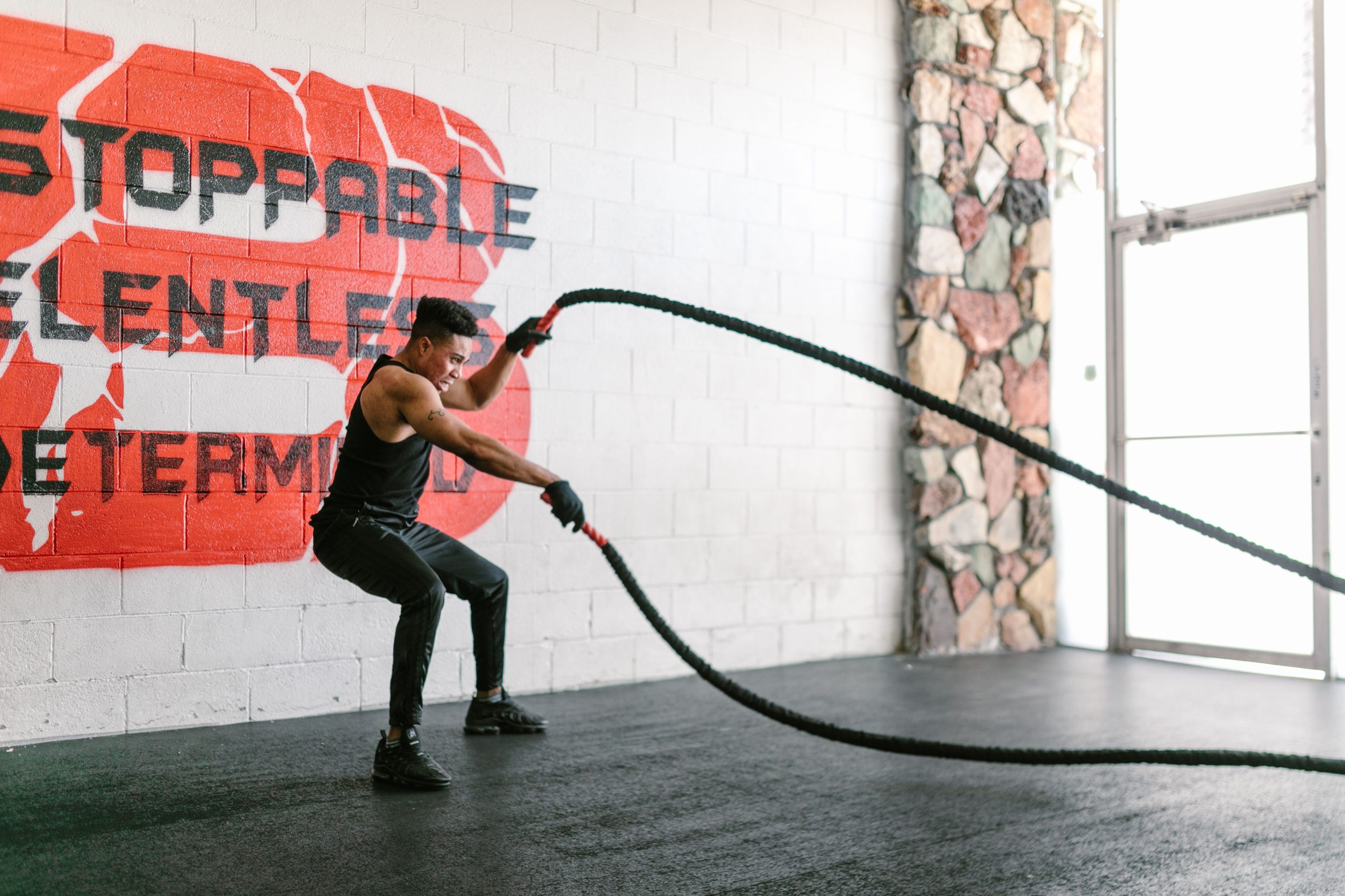
Looking for something more intense than walking or cycling? A few less obvious options can get your heart pumping without stressing your knees.
- Shadow boxing: A great way to build cardiovascular endurance while improving your balance and coordination. Keep your stance stable, limit your footwork, and avoid deep lunges, jumping, or rapid pivots. For a more challenging workout, use timed intervals or increase the punching speed/tempo.
- Battle rope intervals: Battle ropes are driven primarily by your upper body and core, making them a good option when you want a high-intensity cardio workout without much knee involvement. Keep your stance wide and stable rather than bouncing or shifting your weight from side to side. Try short work intervals followed by brief recovery periods.
- Heavy bag work: Can be knee-friendly if you keep your footwork minimal and controlled rather than moving around the bag with quick pivots or lunges. Focus the power in your punches, not your legs.
You don’t need to run, jump, or spend an hour on a cardio machine to get your heart rate up. When your knee limits what you can do, think beyond traditional cardio. The goal is to find movements that challenge your cardiovascular system while sparing your knees.
Cardio Exercises to Avoid With Knee Pain
Some cardio exercises place more stress on the knees than others and can be problematic even when you don’t have an injury.
Running is one example. It’s not inherently bad for your knees, but it involves repetitive impact and can expose the joint to sudden forces if you trip, step into a pothole, or change direction unexpectedly.
This kind of repetitive stress can be harder on a knee that’s already been injured. Structural damage from a previous fracture, ligament tear, or other trauma makes the joint more vulnerable to degeneration over time, including osteoarthritis. While you can’t reverse knee arthritis, lifestyle changes can reduce your symptoms and slow bone loss.
With an injured or sensitive knee, you may also want to avoid the following:
- Jogging: The repetitive impact can be a lot for an already irritated knee, especially when recovering from an injury. If walking is still painful or causing swelling, jogging probably isn’t the next step.
- Sports with pivoting or sudden direction changes: Basketball, tennis, soccer, and similar sports combine running with rapid stops, pivots, and changes of direction. Those movements can place rotational stress on the knee and may cause or worsen a meniscus or ligament injury.
- High-impact cardio group classes: Many bootcamp-style or HIIT classes mix in jumping, sprinting, or fast directional changes that aren’t always easy to modify on the fly.
Personally, I wouldn’t go jogging after three meniscus tears. Even before those injuries, jogging was already hard on my knees—it’s just not something my body tolerates well.
If jogging works for you, there’s no reason to assume you can never do it again. But if your knee is currently injured or painful, I’d leave it out until you’ve rebuilt enough strength to handle the impact.
Are Plyometrics Bad for Your Knees?
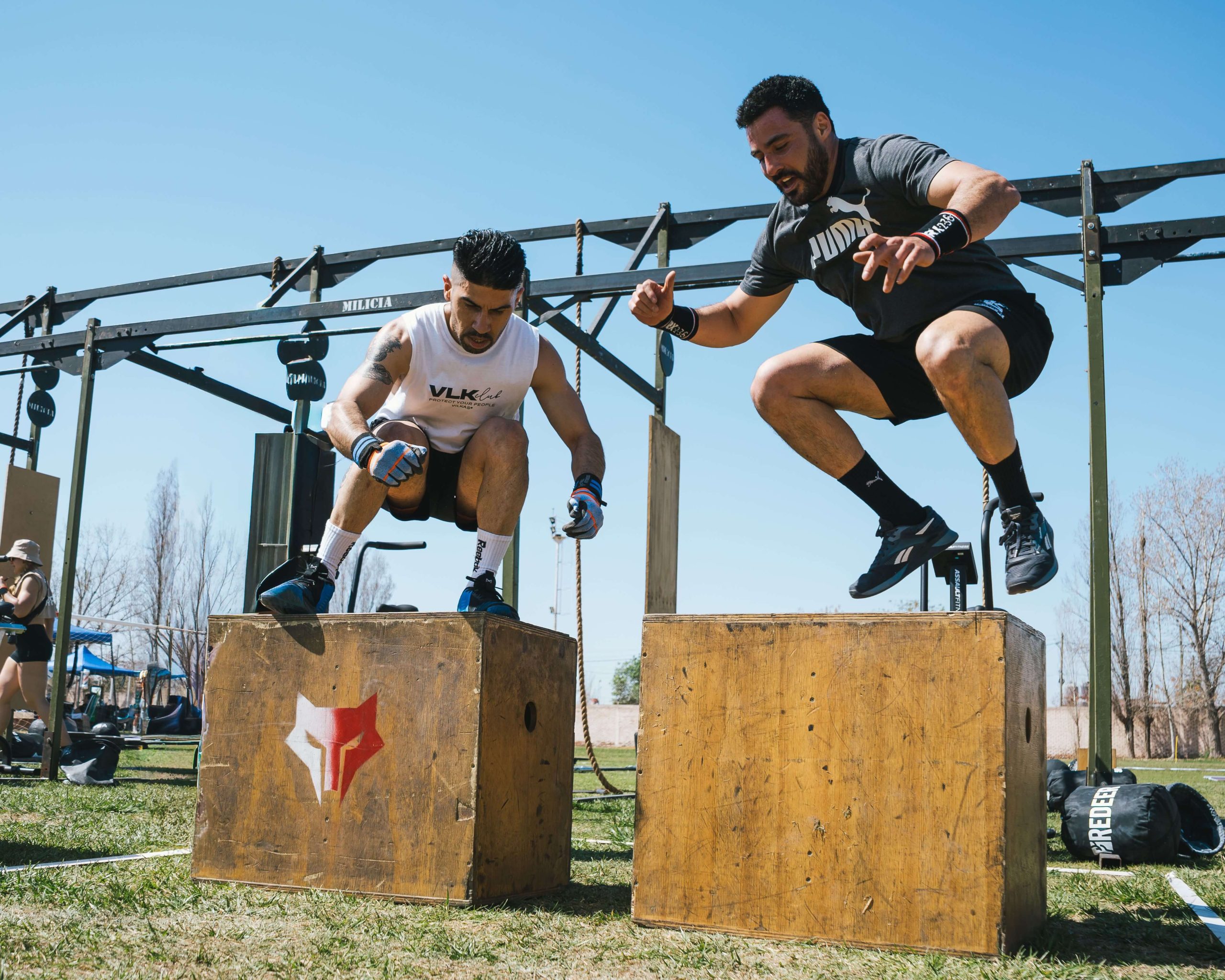
Like most cardio exercises, plyometrics aren’t inherently bad for your knees. Jumping jacks, burpees, box jumps, and other explosive movements can build strength, power, balance, coordination, and cardiovascular fitness.
In a 2024 study, 24 men completed either 16 weeks of plyometric training or conventional workouts.
The plyometric group made greater improvements in several measures of hip and knee muscle strength, including hip and knee extension torque. Plyometric training also increased knee bend during landing and reduced twisting, impact loading, and the forces acting on the knee at peak ground contact.
Simply put, plyometrics can improve knee biomechanics and, in turn, functional fitness and sports performance. However, that doesn’t make it the best cardio for bad knees. If you have a meniscus tear or another knee injury, If you have a meniscus tear or another knee injury, try upper-body plyometrics like:
- Medicine ball slams
- Medicine ball chest passes
- Sit-up and pass
- Overhead throws
- Clap push-ups
- Plyo push-ups
Keep in mind that plyometric training requires a solid foundation of strength, endurance, and coordination, and it’s fairly easy to get injured without one. Many of these exercises are also hard on the spine and can trigger or worsen lower back pain.
As for lower-body plyometrics, they’re definitely not ideal when you’re dealing with a knee injury.
You may be able to squat with a meniscus tear, but that doesn’t mean your joints can handle jumping jacks, jump squats, box jumps, or skater hops. These movements involve sudden, explosive landing forces that place significantly more demand on the knee than a standard squat.
So yes, you can do plyometrics with a knee injury, but stick to upper-body movements and build up your strength and endurance before progressing to more advanced exercises. If your main goal is just staying fit, there are safer ways to maintain your weight and preserve lean mass while recovering from a knee injury, or any injury, for that matter.
Don't Let a Knee Injury Put Your Fitness on Hold
Dealing with a knee injury can be nerve-wracking, especially if you’re an athlete, regular gym-goer, or simply someone who loves being active. The truth is, you may never do things exactly the way you used to, and your knee might never feel quite the same. But that doesn’t mean you can’t work around it.
Take me, for example. I live with chronic back pain and have sustained several knee injuries in a relatively short period. I can still squat, deadlift, and do cardio, just differently than before.
Before my knee injuries, I’d walk briskly on the treadmill at a 12–15% incline. These days, I rarely go above 3.5–4%, and I’ll often mix treadmill walking with other forms of cardio that put less strain on the knee.
Could I still walk at a 15% incline? Absolutely. But I know my knee is likely to complain later, so I choose not to.
What matters most is figuring out what works for you. Keep an open mind, try different exercises, and pay attention to how your body responds, not how you think it should respond. Part of that is acknowledging your limitations and adapting to them, and part of it is knowing when to stop.
There’s no single best cardio for bad knees. Individual tolerance varies too much for that. Just because someone else recovered from an ACL tear and went back to running doesn’t mean that should be your goal, too.
Focus on what you can do, and rebuild your strength without pushing your body past what it’s ready for. Pain doesn’t always mean stop. Sometimes, it means adapt. Most exercises, workouts, and daily activities can be modified to fit where you are right now.
I’m here to help you. Together, we can build a training plan that fits your body—and your health goals. Take a look at my service plans and reach out when you’re ready to start.
A Note About AI: Some images on Shape Your Energy are created with the help of AI, and I may occasionally use AI tools to refine parts of the text for clarity, flow, or readability.
The content itself is written by me, based on my professional knowledge, experience, research, and original ideas. I don't use AI to generate my articles or replace my own expertise and judgment. Any AI-assisted edits are reviewed and adapted by me before publication.
Knee-Friendly Cardio: FAQs
There isn't a single best cardio exercise for bad knees. The right choice depends on your injury, current symptoms, range of motion, fitness level, and, most importantly, how your knee responds to the movement.
For one person, stationary cycling may be ideal. Someone else may do better with swimming, rowing, or brisk walking. The best option is ultimately the one that raises your heart rate without worsening pain, swelling, or other symptoms during or after exercise.
You may be able to do cardio every day, but that doesn't mean you should repeat the same activity at the same intensity. A safer approach is to vary the type, duration, and intensity of your workouts.
For example, you might cycle one day, swim the next, and do an upper-body cardio session after that. See how your knee feels over the next 24 hours to determine whether your current workload is appropriate.
When people ask me about cardio for bad knees, a recumbent bike is usually my first suggestion, since the reclined position reduces the amount of weight-bearing through the knee. Stationary bikes, rowing machines, and some treadmills may also work well, depending on your injury and range of motion.
Not necessarily, but I wouldn't call it knee-friendly either. The elliptical's fixed foot path can feel unnatural for certain injuries, particularly meniscus tears. That's why some people experience pinching or discomfort, while others tolerate it just fine.
If the movement feels smooth and comfortable, there's no reason to avoid the elliptical simply because you have knee pain. If it causes catching, pinching, or discomfort, look into other options.
Traditional HIIT, which often involves jumping, sprinting, or fast direction changes, isn't ideal when your knee hurts. However, you can still get an intense interval-style workout by alternating fast and slow intervals on a bike, rower, treadmill, or elliptical.
Yes, you can get a heart-pounding workout without stressing your knees. Try seated or upper-body-dominant cardio, such as an arms-only bike, battle ropes from a stable stance, seated SkiErg work, upper-body circuits, or medicine-ball intervals.
Rowing can be a good option for some people, but it isn't automatically knee-friendly. The deep knee bend at the front of each stroke can be uncomfortable with certain injuries, particularly if your knee doesn't tolerate flexion well.
If you're ready to give it a try, start with a short, light session and avoid forcing your knees into a deep position. Your technique and range of motion matter more than simply choosing a “low-impact” machine.
Water‑based cardio like swimming, aqua jogging, or water aerobics is ideal because buoyancy reduces joint stress. Recumbent cycling and rowing are also excellent because they distribute load more evenly and minimize impact.
Delayed symptoms can mean the total workload was more than your knee currently tolerates. You may feel perfectly fine during a 20-minute workout but experience pain, stiffness, or swelling later that day or the following morning.
Rather than judging an exercise solely by how it feels while you're doing it, monitor your symptoms over the next 24-48 hours. If the pain and discomfort persist after a particular exercise, scale back the duration or intensity, or switch to a different form of cardio.
Yes, but cardio isn't the only factor determining whether you lose or maintain weight. Your overall energy intake, daily activity, muscle mass, and recovery all matter.
A knee injury can reduce your activity level, which is one reason cardiovascular exercise can be useful. But you don't need to compensate with long or strenuous workouts. Adjusting your diet while maintaining whatever activity your knee tolerates is a more sustainable approach.
Yes, incline walking can reduce stress on the knee joint compared to walking on flat ground. Research shows that walking uphill (3–8%) decreases tibiofemoral joint loading because you take shorter steps, keep a slight bend in the knee, and shift more of the work to your hips and glutes. This makes it a knee‑friendly option for people with patellofemoral pain, mild arthritis, or general sensitivity to impact. If you feel discomfort when walking on an incline, lower the grade or shorten your stride.
It can be, provided you walk at an intensity or duration that challenges your cardiovascular system—and your knee tolerates it.
Consider your fitness level, too. A previously competitive runner may need a very different stimulus from someone rebuilding basic fitness after knee surgery. If regular walking doesn't feel challenging enough, you can experiment with pace, duration, or other low-impact cardio for bad knees rather than simply walking longer and longer.
Don't use time alone as the deciding factor. Returning to running depends on whether you've regained sufficient strength, movement control, range of motion, and tolerance to progressively higher loads.
A better progression is often walking → faster walking → more demanding strength work → running drills → gradual return to running, with the exact steps depending on the injury and rehab plan.
And if running continues to cause symptoms, there's no rule saying you have to return to it. You can maintain excellent cardiovascular fitness through other low-impact aerobic exercises.
Yes, depending on the injury and what your clinician or physical therapist has cleared you to do. You can shift the cardiovascular demand toward movements that require less knee flexion. For example, upper-body intervals, certain swimming techniques, or cardio machines that require little or no leg work, such as the SkyErg.
You don't need to achieve a “normal” range of motion before you can train your cardiovascular system. The key is choosing movements that fit your current ROM rather than forcing the knee into positions it doesn't tolerate.
Start with 10–15 minutes and increase the duration gradually. Many people with knee issues tolerate shorter, more frequent sessions better than long workouts. You can also use intervals to make a shorter session more challenging without necessarily increasing the amount of time your knee is under load.
A knee brace can help if you feel pain, instability, or mild discomfort, but it shouldn’t replace strength work. More importantly, don't use a brace to mask symptoms and push through a workout your knee isn't ready for.
Personally, I wear a brace when my cardio session involves a lot of leg work and lasts longer than 20-25 minutes. I skip it during warm-ups (e.g., treadmill walking before a strength workout), but wear it during my main cardio session, after strength training, when my legs are already fatigued and my knee tends to be more sensitive.