
Tennis Elbow and Weight Training: Can You Keep Lifting?

-
Andra Picincu
Lifting weights with tennis elbow isn’t necessarily off-limits. Although recovery can take six months or longer, you may still be able to train your upper body. The key is to modify or replace certain exercises, reduce the load as needed, and avoid pushing through pain.
Note that tennis elbow and weight training often go hand in hand. This overuse injury affects 1 to 3% of people, but fewer than 5% of cases are actually related to playing tennis. Repetitive movements, including those performed in the gym, can trigger or aggravate its symptoms. Push-ups, pull-ups, chin-ups, and lateral raises are common culprits.
However, that doesn’t mean you have to stop training. With the right adjustments, you can keep working out while giving your elbow a chance to recover. Here’s how to approach it safely.
The Link Between Tennis Elbow and Weight Training
Lateral epicondylitis, or tennis elbow, is common among athletes and gym-goers due to repetitive stress from lifting and gripping activities.
Take bicep curls, for example. If you’re cranking out set after set with a heavy dumbbell, the repeated gripping and wrist movement strain the tendons around your elbow. Over time, you may begin to experience pain and discomfort—even during light activities, such as carrying a grocery bag.
I’m not saying weight training is the main cause of tennis elbow. You can develop it from all sorts of everyday activities, including jobs that involve repetitive gripping and wrist movements, such as painting, typing, or gardening.
However, certain training habits, like poor lifting form or excessive loads, can aggravate existing symptoms and make it harder for your elbow to recover.
The link between tennis elbow and weight training often comes down to the following factors:
Poor Lifting Form
This issue shows up most often with bench presses, rows, triceps work, bicep curls, and pulling movements. Sloppy technique places unnecessary stress on the elbow and the tissues around it.
Lifting Too Heavy, Too Soon
Your muscles may be able to handle a heavier load, but that doesn’t mean your joints and tendons are ready for it. Add load gradually and give your body time to catch up.
Ramping Up the Intensity Too Fast
The same principle applies here. If you ramp up your training volume or intensity faster than your elbow can tolerate, you may irritate the surrounding tissues and end up with an overuse injury.
Overdoing Isolation Work
Single-joint exercises like bicep curls, lateral raises, and triceps extensions have their place in a workout routine.
The problem is doing too much of them, especially when you’re already putting plenty of stress on the elbow and forearm. Repeated loading can leave the tendons irritated and the pain lingering long after your workout.
Skipping Your Warm-up
Life gets busy, and sometimes you feel lucky just to make it to the gym for an hour. Still, it’s worth spending a few minutes preparing your wrists, forearms, and elbows before jumping into heavy sets.
Think gentle forearm rotations, wrist movements, or light resistance exercises rather than going straight from the locker room to your heaviest set.
Going Overboard with Pressing Exercises
Bench and overhead presses can put extra stress on the elbow because you’re gripping the weight tightly while keeping your wrist and elbow stable under load. That constant tension travels through the forearm and into the tendons around the elbow.
Without enough recovery, too much pressing volume can keep the area irritated instead of giving it a chance to settle down.
Repeating the Same Stress Pattern
If a particular exercise hurts your elbow, don’t keep forcing it just because it’s on your to-do list.
Say you experience elbow pain when you do triceps kickbacks. Try cable kickbacks or pushdowns instead, or even a close-grip bench press to see if it gets better. You could also experiment with a lighter weight or resistance bands for a couple of weeks to test the waters.
It goes without saying that training through pain is a bad idea. Sure, you want to make progress, but at what cost? For every exercise that flares up tennis elbow, there’s a safer alternative you could try.
If the pain is severe, taking a break from aggravating exercises may be worth it. But if you’re like me and can’t stand the idea of stepping away from training completely, adjust your workout instead. I’ll cover some practical options later in this guide, so read on.
Can You Still Lift Weights with Tennis Elbow?
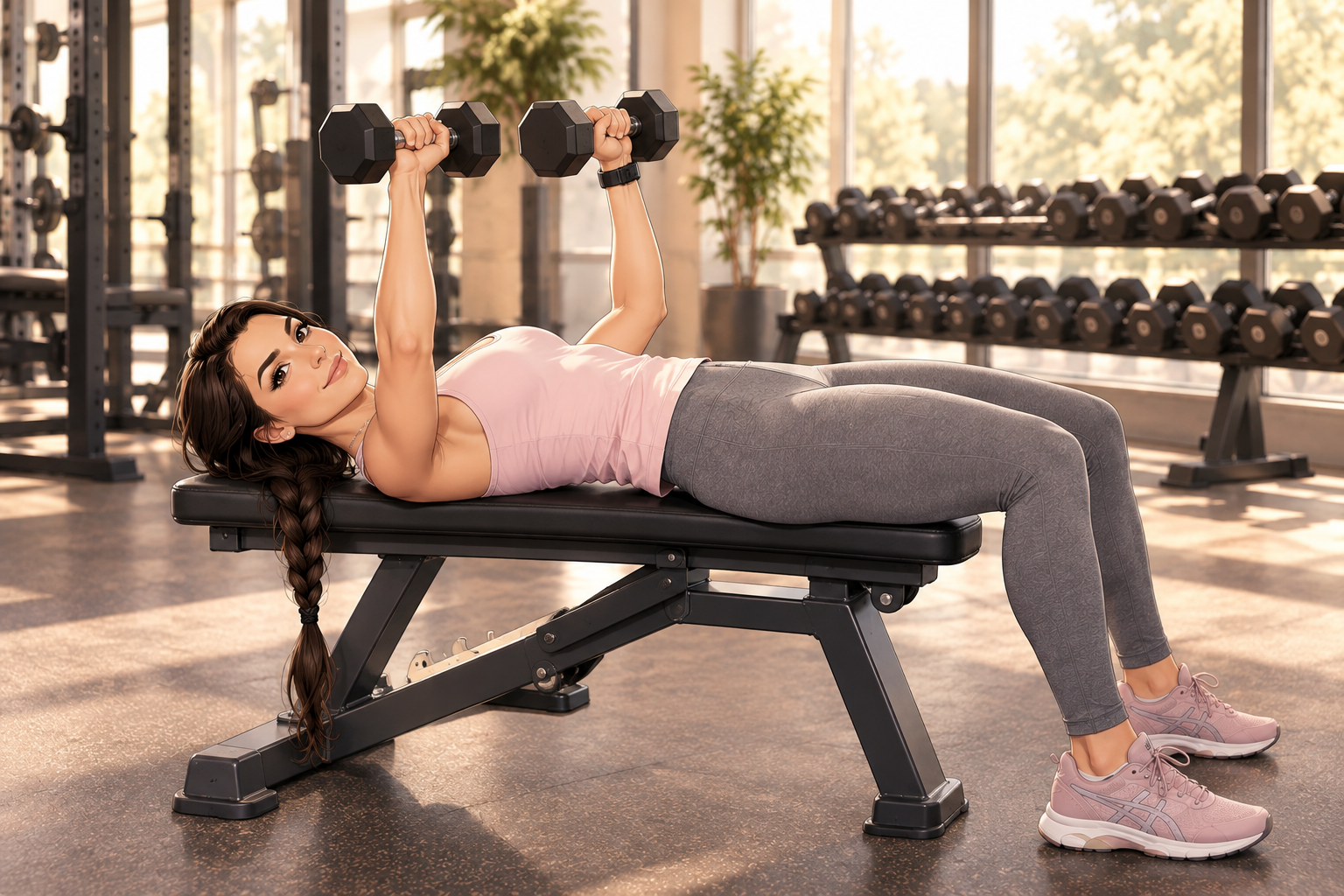
Lifting weights with tennis elbow is safe as long as you modify your routine and avoid exercises that trigger pain. I’ve been dealing with this condition on and off for over a decade, but it hasn’t stopped me from training or making progress.
Strength exercises may actually help manage tennis elbow, provided you adjust the load to your symptoms and don’t push through a flare-up.
A clinical trial published in the Upsala Journal of Medical Sciences found that people with chronic tennis elbow who followed a daily exercise program with gradually increasing loads experienced greater and faster pain reduction than those on a waitlist.
❗”Chronic tennis elbow should not be treated with rest but with graded exercise,” explain the researchers. Physical activity promotes neural reorganization and hypertrophy of the muscle-tendon unit, both of which support recovery.
Rest, on the other hand, reduces strength by shrinking muscle–tendon volume and neuromuscular capacity. It also affects bone mineralization, which may increase injury risk over time.
Eccentric exercise, which involves lengthening a muscle while it’s under tension, appears to be the most effective approach.
In a 2014 study involving 120 people with chronic tennis elbow, participants who performed eccentric movements, such as controlled overhead triceps extensions and reverse bicep curls, reported faster pain reduction than those doing concentric exercises, where the muscle shortens under load.
The eccentric group had, on average, a 10% higher responder rate across different levels of pain reduction, and the gap in pain and strength held up at the three-, six-, and 12-month follow-ups. They also came out ahead on muscle strength.
A systematic review of 12 studies reports similar findings. Across the board, strength training significantly reduced pain while improving physical function and grip strength in people with tennis elbow.
“Resistance training promotes growth and/or increases in the strength of ligaments, tendons, tendon-to-bone and ligament-to-bone junction strength, joint cartilage, and the connective tissue sheaths within muscle.” Sports Med. 1986 Jan-Feb;3(1):61-8. doi: 10.2165/00007256-198603010-00006. PMID: 3633121.
What matters most is minimizing strain on the elbow joint and wrist extensors while maintaining or improving strength and mobility. Using an elbow sleeve for support and incorporating tennis elbow exercises, especially during your warm-up, can also help protect the affected area.
How to Keep Training When Your Elbow Hurts
You might think that tennis elbow and weight training don’t mix, but that’s rarely true. Tennis elbow severity ranges from mild soreness during activity to severe, constant pain. If your symptoms are manageable, you should be able to keep working out with a few small adjustments.
First, identify which exercises or movement patterns cause pain. These typically include:
❌ Barbell bench press
❌ Heavy barbell curls or reverse curls
❌ Heavy wrist curls and extensions
❌ Straight-arm shoulder raises
❌ Cable exercises performed with your arm straight or nearly straight
❌ Pull-ups and chin-ups
❌ Traditional push-ups
❌ Skullcrushers
Straight-arm pulldowns, for example, put a lot of strain on the forearm extensors, especially under heavy load. The fix is simple: keep a slight bend in your elbow and use lighter weights.
Once you’ve identified the culprits, look for alternatives that hit the same muscle groups but with less stress on the elbow joint and tendons. It takes trial and error, and you’ll have to constantly adjust your training routine, but over time, you’ll get a feel for what your elbow can handle and what it can’t.
That said, here’s how to tweak your workouts when dealing with tennis elbow:
Switch to a Neutral Grip When Possible
Using a neutral grip, with your palms facing each other, can feel more comfortable than a fully supinated or pronated grip on exercises like pull-ups and curls. Experiment with different grip variations and stick with the one that feels best for your elbow.
Keep Your Wrist Aligned with Your Forearm
During pulling exercises, avoid letting your wrist bend excessively backward or sideways. A straighter wrist position may help reduce discomfort, especially when gripping a bar or handle.
Use Lighter Weights and Build Back Gradually
Reduce the weight to take some of the pressure off your elbow. If, say, you’re currently using 45-pound dumbbells for bicep curls, switch to 20-pound dumbbells until the pain subsides. As your symptoms improve, gradually work your way back up.
Cut Back on Training Volume
If your elbow keeps flaring up, reduce how often you train the affected area, how many sets you perform, or both.
Say your pain gets worse when training the triceps. Try two or three lighter sets per exercise instead of four, avoid any movements that irritate your elbow, or take a couple of weeks off triceps altogether.
Don’t worry about losing progress. Your triceps still get plenty of work when you’re training your chest and other upper-body muscles, so taking a short break from isolation exercises shouldn’t derail your routine.
Modify Exercises Instead of Pushing Through Pain
If a particular movement consistently triggers elbow pain, don’t just grit your teeth and push through it. Try changing the grip, range of motion, or load.
You can also temporarily leave the exercise out and choose an alternative that works the same muscle group with less stress on your elbow.
Let’s see a few examples:
- Lightweight cable or scaption raises instead of lateral raises
- Strapped or neutral-grip rows instead of heavy rows
- Hammer curls with a neutral wrist instead of barbell curls
- Assisted pull-ups, neutral-grip lat pulldowns, or rows instead of regular pull-ups
- Push-ups on your fists or using push-up handles instead of traditional push-ups
- Cable triceps pushdowns with a V-bar or rope instead of skullcrushers
Swapping a barbell for dumbbells can help, too. Dumbbells allow each arm to follow a more natural path instead of forcing both wrists and elbows into the same position.
Use Lifting Straps to Spare Your Grip
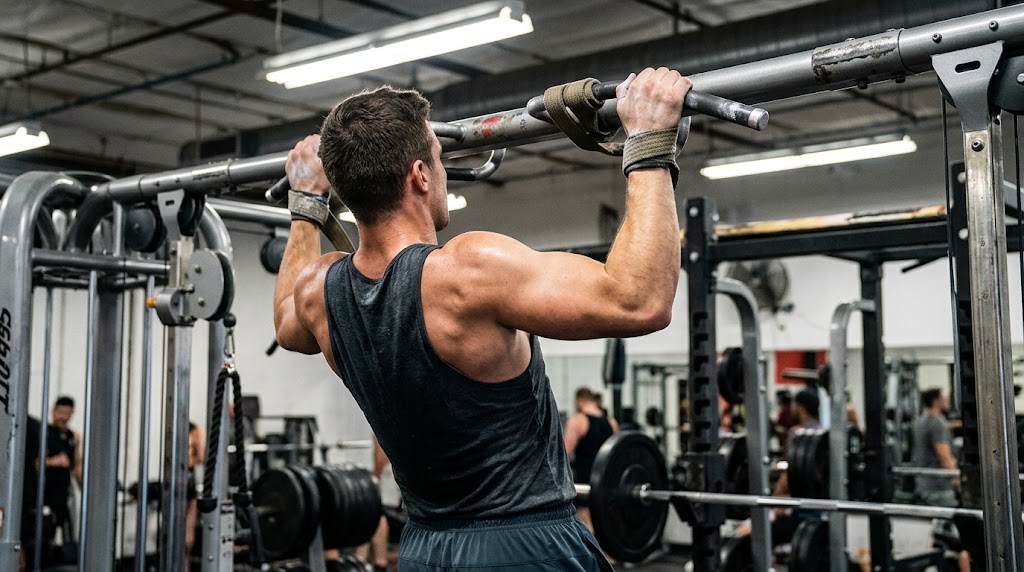
Lifting straps may help on certain pulling exercises by reducing how hard you need to grip the bar or handle. They won’t eliminate all stress on the elbow, but they can make it easier to keep training without making things worse.
Wear an Elbow Brace
 A high-quality elbow brace can be a game-changer when you’re dealing with tennis elbow. I’ve been wearing one during upper-body workouts for more than two years, and it really makes a difference.
Elbow braces provide targeted compression and support around the affected area, which may help reduce discomfort. They don’t directly impact recovery but can diminish pain and make it easier to get through your workouts.
Say your elbow hurts during bench presses. A compression brace may help ease the discomfort, allowing you to keep lifting. Just keep in mind that while you may feel better with the brace on, the underlying issue hasn’t gone away.
Do Some Prep Work
Most lifters do some light cardio before heading to the weights room. That’s a good habit, but you know what’s even better for someone with tennis elbow?
Foam rolling the biceps, triceps, and forearms for a few minutes, followed by some light, high-rep sets. If you also have back pain, here’s how to foam roll your lower back.
This self-massage technique combined with high-rep training helps increase blood flow to the affected area. As a result, it may help reduce pain and stiffness before you move on to heavier weights.
Tendons get poor blood flow, and poor blood flow means slower healing, so getting blood into the area can aid in recovery.
Add Slow Eccentric Exercises to the Mix
Slow eccentric training targets the lengthening phase of a muscle contraction, promoting tendon remodeling and tissue healing. The idea is to gradually expose the tendon to load in a controlled way, rather than simply hammering it with heavy or repetitive movements.
With that in mind, incorporate two or three eccentric forearm exercises into your workouts to recover faster:
- Dumbbell eccentric wrist extensions: Rest your forearm flat across a table or your thigh, with your wrist hanging freely over the edge and your palm facing down. Use your healthy hand to lift a light dumbbell into wrist extension. Then remove the assistance and slowly lower the weight over four to five seconds.
- Band-resisted slow releases: Secure a loop resistance band beneath your foot or around a sturdy anchor and hold the other end with your palm facing down. Use your healthy hand to bring your wrist into extension, then remove the assistance and slowly control the band’s pull as your wrist returns to the starting position over about five seconds.
- Eccentric forearm pronation: Rest your forearm on a table and hold a light hammer, club, or dumbbell near one end. Starting with the heavier end pointing upward, slowly allow the weight to rotate inward as you control the movement with your forearm muscles. Use your other hand to return it to the starting position.
As a general rule, aim for three sets of 10 to 15 controlled reps per exercise, three to four times a week. Start with a light resistance and adjust the volume based on how your elbow responds.
Incorporate Isometric Holds into Your Workout
When it comes to tennis elbow and weight training, you might think you have two options:
- Continue training as usual, but with lighter loads and less volume.
- Switch to high-repetition exercises with little or no weight, such as resistance-band work.
According to a 2017 study by Dr. Keith Baar, neither approach is optimal for tendon repair.
His research suggests that tendons stop responding to loading stimulus after roughly 10 minutes of activity. Continuing to load the tendon beyond that point may provide little additional benefit while increasing wear and tear.
So, what’s the alternative?
Baar proposes short bouts of isometric training: 30-second holds at a moderate effort (40-50% of your max), followed by two minutes of rest, keeping total loading time for the affected tendon under 10 minutes.
Perform four reps per affected area, once or twice a day, spaced at least eight hours apart, for two months.
For tennis elbow, you could try a wrist extensor isometric hold:
- Rest your forearm on a table with your palm facing down and your hand hanging off the edge.
- Press the back of your hand upward against resistance (e.g., a light dumbbell or someone’s hand). Hold for 30 seconds at moderate effort.
- Rest two minutes, then repeat for a total of four reps.
The goal is to deliver enough mechanical stimulus without unnecessarily prolonging the load.
If your pain is mild to moderate, I recommend adding isometric work on top of your existing (modified) routine, rather than choosing one over the other. Isometric holds and weight training aren’t mutually exclusive.
Train Around the Injury, Not Through It
Dealing with a flare-up? You can still hit the gym—just shift your focus to core and lower-body work, or lean on cardio for a while.
Any activity is better than none, and staying physically active supports recovery and overall health far more than prolonged rest does. If things go well, you should be able to gradually resume training within weeks.
Also, look beyond your workout routine. Nutrition plays a key role in tissue repair and can help reduce inflammation. Tweak your diet to support your recovery, and if you’re considering collagen supplements for joint pain, give them a couple of months to see whether they make a difference.
Tennis Elbow Doesn't Mean You Have to Stop Training
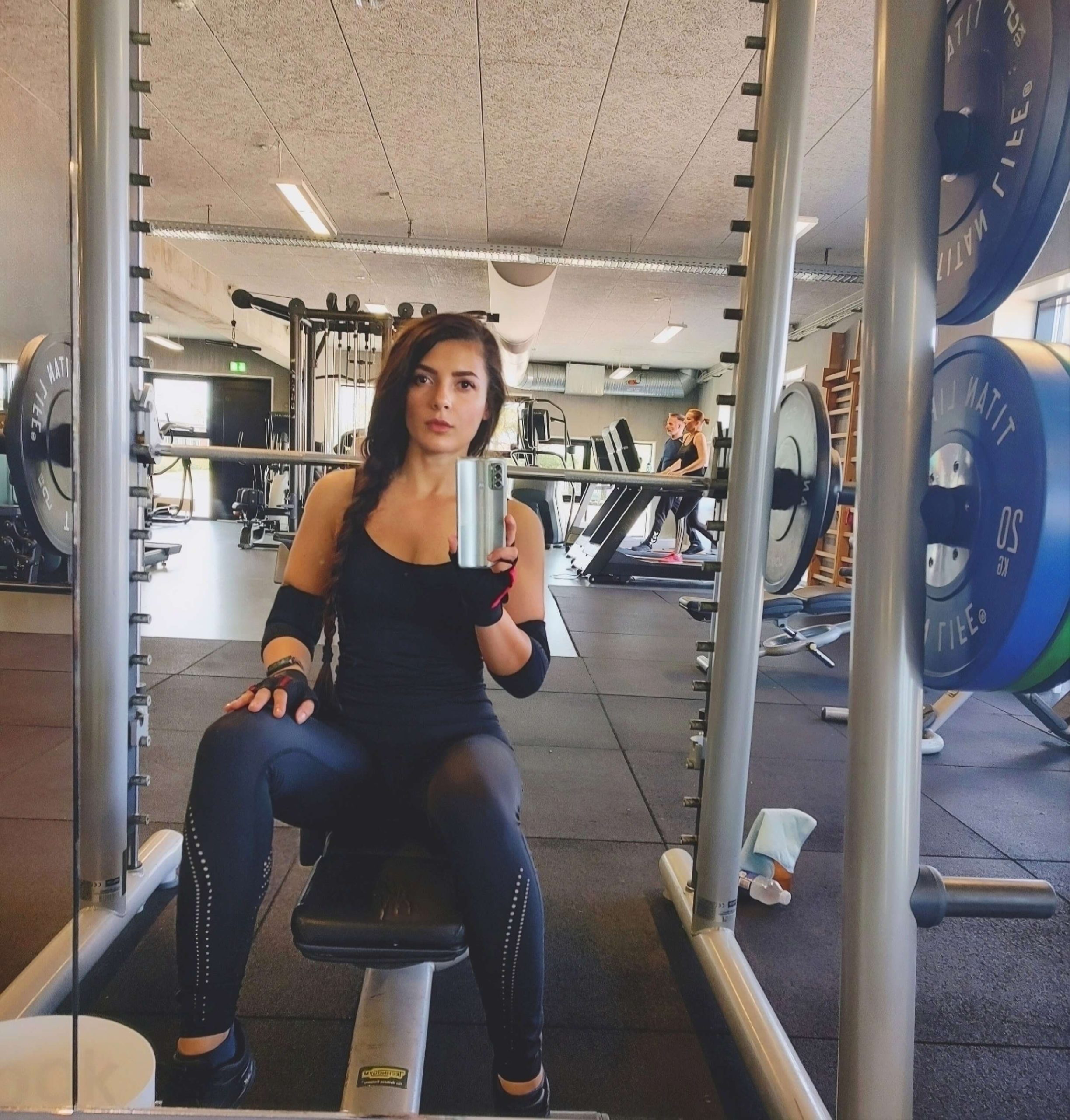 Tennis elbow can limit your mobility, but that doesn’t mean you should stop training. As long as the pain is manageable, you can keep up with your workouts. The key is to avoid movements that worsen your symptoms, such as exercises performed with your elbow fully straight or locked.
Pain may come and go, or it may be constant. In either case, it’s a good idea to do some prep work, wear an elbow brace, and switch to a neutral grip. Also, cut back on training volume and use lighter weights than usual.
Since tennis elbow is an overuse injury, avoid repeating the same exercises too frequently. Take the bench press, for instance. Whether you’re using a barbell or dumbbells, you may want to limit it to once or twice a week, leaving a few days between sessions.
As a final word, tennis elbow and weight training don’t have to be at odds. Finding the right balance takes some trial and error, and you can experiment on your own or hire a personal trainer to skip the guesswork.
I’m here to help you figure out what’s triggering your symptoms and how to safely train around your injury. Book a consultation to get started.
A Note About AI: Some images on Shape Your Energy are created with the help of AI, and I may occasionally use AI tools to refine parts of the text for clarity, flow, or readability.
The content itself is written by me, based on my professional knowledge, experience, research, and original ideas. I don't use AI to generate my articles or replace my own expertise and judgment. Any AI-assisted edits are reviewed and adapted by me before publication.
Tennis Elbow and Weight Training FAQs
Generally, yes. If your symptoms are manageable, you may continue weight training by reducing the load, volume, or range of motion and modifying exercises that cause pain. The goal is to find movements your elbow can tolerate while gradually rebuilding strength.
The movements that cause trouble vary from person to person. Many gym-goers experience pain with heavy curls, pull-ups, straight-arm exercises, some pressing movements, and exercises that require a lot of gripping. Heavy or high-volume pulling can also be problematic. Rotational movements of the wrist under a load can irritate the tendon, too.
Instead of eliminating an entire category of exercises right off the bat, pay attention to which movements worsen your symptoms.
Not necessarily. Research suggests that graded exercise, not rest, tends to produce better outcomes for chronic tennis elbow. Complete rest can actually reduce muscle-tendon strength and neuromuscular capacity over time. That said, if your pain is severe, a short break from weight training may help.
Bicep curls are a common trigger for people with tennis elbow, especially when extending or bending the wrists backward, squeezing the dumbbell or barbell too tightly, or lifting too heavy. If this exercise is an integral part of your workouts, try reducing the weight and volume. Better yet, switch to a variation that feels more comfortable, such as cable curls or neutral-grip hammer curls.
A neutral grip (palms facing each other) is less likely to cause pain than a fully pronated or supinated grip, especially on pull-ups, rows, and curls. Experiment with different grips to see what your elbow tolerates best.
Both are possible. Poor form, lifting too heavy too soon, or ramping up the volume too quickly can all contribute to tennis elbow. If you already have this condition, the same factors can make it worse.
This exercise requires gripping, wrist stabilization, and pulling, which makes it particularly challenging. Some lifters find a neutral grip more comfortable than an overhand or underhand grip, while others need to temporarily avoid pull-ups. If you're looking for an alternative, try assisted pull-ups, neutral-grip pulldowns, or supported rows.
It depends on how your elbow responds. Barbell bench presses are more likely to worsen your symptoms than dumbbell presses, so you might want to choose the latter. Alternatively, use a different grip or switch to the machine chest press, which makes it easier to push heavy loads safely.
Reducing the load can make some exercises more tolerable, but simply replacing heavy lifting with high-rep work won't necessarily help. What matters is your lifting form and factors like workout volume and frequency. Choose a manageable load, control your technique, and adjust the number of sets and reps as your symptoms allow.
Elbow braces or sleeves provide compression and support, which can reduce discomfort during training. However, they don't address the underlying issue, so it's best to use them alongside other adjustments, not as a standalone fix.
Recovery time depends on the severity of your symptoms, whether or not you're having physical therapy, and what your workouts look like. Tennis elbow can last anywhere from six months to a year or longer, though mild cases may improve in a few weeks. Even if the pain subsides, returning to your previous workload too quickly can cause a flare-up.
Short isometric holds at moderate effort can provide enough mechanical stimulus to support tendon healing without overloading it. Isometrics work well alongside your regular training rather than replacing it.