
-
Andra Picincu
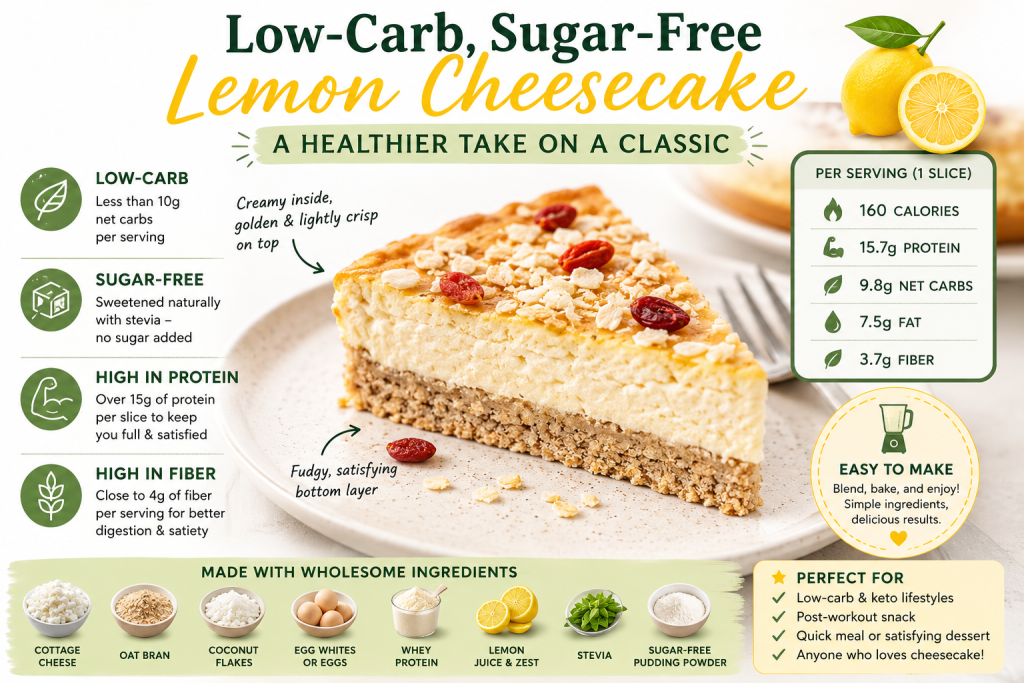
Cheesecake might not be the first dessert that comes to mind when you think of clean eating, but it’s incredibly versatile. With a few smart swaps, you can turn it into a delicious, healthy treat. Take this lemon cheesecake recipe, for example: it’s sugar-free, low-carb, high in protein, and comes in at just 160 calories per serving.
I rarely buy cake or cookies because they have little or no nutritional value. Generally, I avoid sugar, white flour, margarine, and other highly processed ingredients in desserts, so I created a low-carb cheesecake recipe that only contains good stuff. A little lemon juice and zest give it plenty of flavor, while oat bran and unsweetened coconut flakes add a rich, satisfying texture.
The real magic happens in the oven. As the cake bakes, the cheese settles to the bottom and turns fudgy and creamy. Meanwhile, the oats rise to the top and form a lightly golden crust.
This lemon cheesecake is one of my all-time favorite desserts—and even if you’re not watching your carbs, you’ll still love it.
What Makes This Lemon Cheesecake Recipe Different?
Rich and creamy, cheesecake packs a flavorful punch without feeling heavy or overly sweet. Still, most recipes are high in sugar and fat, landing around 250 to 400 calories per slice. Restaurant portions can be far more indulgent, sometimes reaching 1,500 calories.
Personally, I don’t worry too much about calories as long as I stay within my usual range. What matters to me is where those calories come from. Five hundred calories from salmon and quinoa are not the same as 500 calories from cake.
That’s exactly the philosophy behind this lemon cheesecake. Instead of cream cheese and a traditional crust, it combines cottage cheese, whey protein, oat bran, and coconut flakes.
The result? A low-carb, high-protein dessert that fills you up quickly and tastes just like the real thing.
Here’s a closer look at what each ingredient brings to the table.
Ingredient Breakdown
This isn’t your typical cheesecake—the kind made with white flour, refined sugar, crackers, and other processed ingredients that leave you satisfied for 10 minutes and guilty for the rest of the day. Instead, every ingredient here pulls its weight: protein-rich cottage cheese, fiber from oat bran, healthy fats from coconut, and citrus flavor from lemon.
- Oat bran: The outer layer of the oat groat boasts 50% more fiber, 22% more potassium, and 36% fewer calories than regular oats. You can use oat bran in place of rolled, instant, or steel-cut oats in most recipes, including this creamy low-carb cheesecake.
- Coconut flakes: Unsweetened coconut flakes are rich in fiber, minerals, and medium-chain triglycerides (MCTs). Your body can use MCTs for energy, making them ideal for low-carb and keto diets. Coconut flakes also yield a light toasted flavor once baked.
- Egg whites or whole eggs: Adding a couple of eggs helps bind the ingredients and boosts protein. Egg whites provide protein with very little fat, while whole eggs create a richer texture and deeper flavor.
- Whey protein: The main protein booster in the recipe. It also helps bind the batter and gives the cheesecake a smooth, denser texture.
- Cottage cheese: High in protein and calcium, cottage cheese is a healthier alternative to cream cheese. It’s lower in fat and calories and, once blended, contributes to a smooth, creamy texture.
- Stevia: This natural sweetener has no calories or carbs and may help reduce blood glucose levels over time. It’s safe and beneficial for people with diabetes and works well as a sugar substitute in most recipes.
- Sugar-free vanilla pudding powder: Not particularly nutritious, but it enhances flavor and helps thicken the batter. The starches in the powder also contribute to a smoother, more cohesive texture.
- Lemon juice: Adds a fresh, tangy flavor that balances the sweetness. Its acidity reacts with the baking soda, helping lighten the texture.
- Banana (optional): Provides natural sweetness, moisture, and a subtle flavor. Plus, bananas are rich in complex carbs, fiber, potassium, magnesium, and vitamin C.
Feel free to adapt this lemon cheesecake recipe to your taste. For a sweeter dessert, add a banana or a handful of dried fruit like goji berries or cranberries. Just keep in mind that doing so will increase the carbohydrate and sugar content.
Low-Carb Lemon Cheesecake Recipe
One of the things I love most about this lemon cheesecake is how its layers seem to arrange themselves in the oven.
Simply throw everything into a blender, pour the mixture into a baking dish, and the ingredients separate into distinct textures as they bake. The oat bran settles into a moist, almost fudgy bottom layer, while the egg-and-cottage-cheese mixture rises to create a soft, creamy, fluffy top.
And then there’s the topping. Sprinkle a few oat flakes, dried berries, or chopped nuts over the batter before baking, and they turn lightly crisp and golden. It’s almost like magic: one simple blended mixture, yet the finished cheesecake has contrasting layers and textures that make every bite more interesting.
Ready to see how it comes together? Here’s the full recipe, including the exact amounts and a few tips to get those delicious layers just right.
Low-Carb, Sugar-Free Lemon Cheesecake
Ingredients
- 1/2 cup oat bran
- 1 cup water
- 3-4 tbsp coconut flakes (unsweetened)
- 1 scoop unflavored or vanilla whey protein (or 4 tbsp powdered milk)
- 4 egg whites (or 2 whole eggs)
- 1-2 tbsp sugar-free vanilla pudding (powder)
- 1/4 tsp baking soda
- Zest of one lemon
- Juice of 1/2 lemon
- 5.3 oz cottage cheese (150 grams)
- Stevia to taste
Optional ingredients
- Lemon or vanilla extract
- 1 banana
- 1/2 cup Greek yogurt
- 1/4 cup goji berries or cranberries
Instructions
- Add all ingredients to a blender and mix until smooth.
- Pour the mixture into a baking dish.
- If desired, sprinkle a few oat flakes, coconut flakes, dried berries, or chopped nuts over the top.
- Bake at 175°C / 350°F for 30–35 minutes.
- The edges should be set and lightly golden, while the center can still have a slight wobble. The cheesecake will continue to firm up as it cools, especially after refrigeration.
- Serve warm or refrigerate and enjoy it chilled.
Notes
If you love simple, high-protein recipes, you might also want to try these flourless high-protein pancakes. They’re made with wholesome ingredients and come together in minutes, making it easy to pack more protein into your morning without giving up flavor.
Tips & Variations
You can easily adjust this recipe to fit your carb goals and preferred texture. For a thicker, more substantial cheesecake, use up to one cup of oat bran. If you’re keeping the carbs lower, stick to a half cup and add a little more cottage cheese and/or egg whites instead.
Don’t have whey protein? You can replace it with powdered milk, but this swap will change the nutritional profile. Adjust the amount of stevia or other sweetener to taste, depending on how sweet you like your cheesecake.
Note that you don’t have to use both lemon zest and lemon juice. I’ve tried different combinations, and, quite honestly, the results have exceeded my expectations every time. This low-carb lemon cheesecake is seriously delicious!
A Cheesecake You Can Feel Good About
With less than 10 grams of net carbs per serving, this lemon cheesecake recipe is just perfect for low-carb and keto diets. But even if you’re not on a diet, it’s versatile enough to enjoy as a snack between meals, a light dessert, or even a post-workout treat. A couple of slices can be surprisingly filling and can double as a quick meal.
The best part? It tastes simply delicious and can be customized to your liking. Make it sweeter by adjusting the amount of stevia, or switch between vanilla and unflavored protein powder depending on the flavor you prefer. Either way, the carb content stays low.
Need another reason to try this sugar-free cheesecake? Each slice provides close to 4 grams of fiber, potentially more depending on the ingredients you use. Unless you’re fibermaxxing, that’s a meaningful contribution to your daily fiber intake.
So, if you’re craving a light dessert that doubles as a high-protein meal or snack, go ahead and treat yourself. Creamy and fluffy, this lemon cheesecake recipe won’t disappoint.
Lemon Cheesecake Recipe FAQs
Yes. Each serving provides approximately 9.8 grams of net carbs, most of which come from the oat bran and dairy ingredients. If you're following a strict keto diet, double-check the nutrition labels on your specific whey protein, cottage cheese, and pudding mix, as the carb content can vary by brand.
Yes, you can replace whey protein with powdered milk, but the nutritional profile (particularly the protein content) will change.
Alternatively, use a plant-based protein powder, such as soy or pea protein. Different protein powders absorb liquid differently, so you may need to adjust the amount of water used.
Not really, especially if you blend the ingredients thoroughly. Blending breaks down the cottage cheese curds and creates a smoother batter. Cottage cheese is actually a popular base for high-protein cheesecake recipes for exactly this reason.
Yes, but the texture will change. Oat bran gives the cheesecake structure, so reducing or eliminating it will make the cake softer and less dense. If you're trying to cut carbs further, use less oat bran and more cottage cheese and/or egg whites.
That's one of the unusual features of this recipe. Because the batter contains cottage cheese, egg whites, whey protein, oat bran, and liquid, the ingredients behave differently as the cheesecake heats and sets.
The oat-bran-rich mixture forms a denser bottom layer, while the lighter egg-and-cottage-cheese mixture creates a softer top layer. Toppings like oat flakes or chopped nuts turn lightly crisp during baking.
With less than 10 grams of net carbs per serving, this low-carb cheesecake fits into most keto diets. Just be mindful of add-ons like banana or dried fruit, which will raise the carb count.
What's the difference between this lemon cheesecake recipe and a traditional sugar-free cheesecake?
Traditional sugar-free cheesecakes are often still made with cream cheese and a high-fat crust—they cut the sugar but not much else. This recipe goes further by swapping in cottage cheese, oat bran, and whey protein, which lowers the carbs and boosts the protein content.
Yes. The recipe works with either four egg whites or two whole eggs. Whole eggs give the cheesecake a richer flavor and slightly more tender texture, but they'll also increase the fat and calorie content.
Let it cool, then cover and refrigerate it. It's particularly good chilled because the texture becomes firmer and creamier as it rests. I recommend eating it within two days and keeping it refrigerated because it contains cottage cheese and eggs.
Absolutely. Banana, goji berries, cranberries, or fresh berries can all work, depending on the flavor and texture you want. Keep in mind that fruit, especially dried fruit and banana, will increase the carbohydrate and sugar content.
Many sugar-free cheesecake recipes simply replace the sugar while keeping the traditional cream cheese and crust. This recipe takes a different approach: it uses cottage cheese, oat bran, and whey protein to create a higher-protein, lower-carb dessert.

