
You Can Still Squat with a Meniscus Tear—Here's How to Do It Safely

Squatting with a meniscus tear

Tearing your meniscus can feel like a major setback, especially if you’re a regular gym-goer or someone who thrives on staying active. Now that the initial pain has eased and you’re ready to start training, the big question pops up: Is it safe to squat again? The last thing you want is to undo your progress or trigger a flare‑up just when things were starting to improve. 

Luckily, you can continue squatting with a meniscus tear, as long as the injury isn’t severe and you’ve been cleared to resume movement. Squats actually support recovery by strengthening the muscles that stabilize your knee. 

The key is being smart about your technique, listening to your body, and making strategic adjustments to your exercise form. 

Here’s how to get started—and why squats should still be an integral part of your workout. 

Table of Contents
    Add a header to begin generating the table of contents

    The Backstory: How I Learned to Squat Safely After Three Meniscus Tears

    I’ve had three meniscus tears within two years, but I chose not to undergo surgery. Instead, I completed physical therapy and then adjusted my workouts—especially my leg‑training routine—to build quad strength and reduce pain.

    The first meniscus tear was grade II. Although the doctor recommended surgery, I decided to try a more conservative approach. By modifying my training, I was able to resolve the issue completely. A few months later, a follow‑up MRI showed no tear—just a small lesion, likely a remnant of the original injury.

    Unfortunately, I tore my meniscus again later on. It was painful and discouraging, but it also pushed me to refine my approach even further and make my workouts safer and more effective. Today, I use what I’ve learned to help others work around knee discomfort and regain their confidence. 

    To be clear, I’m not a physical therapist, nor do I aim to replace one. What I can do is help you rebuild strength and adjust your workouts so you can better manage the pain that often comes with knee injuries or other limitations. In many cases, physical therapy is the first step. After that, we can start working together to help you safely return to training and reach your health or fitness goals. 

    Strong Quads Are Your Knees’ Best Defense

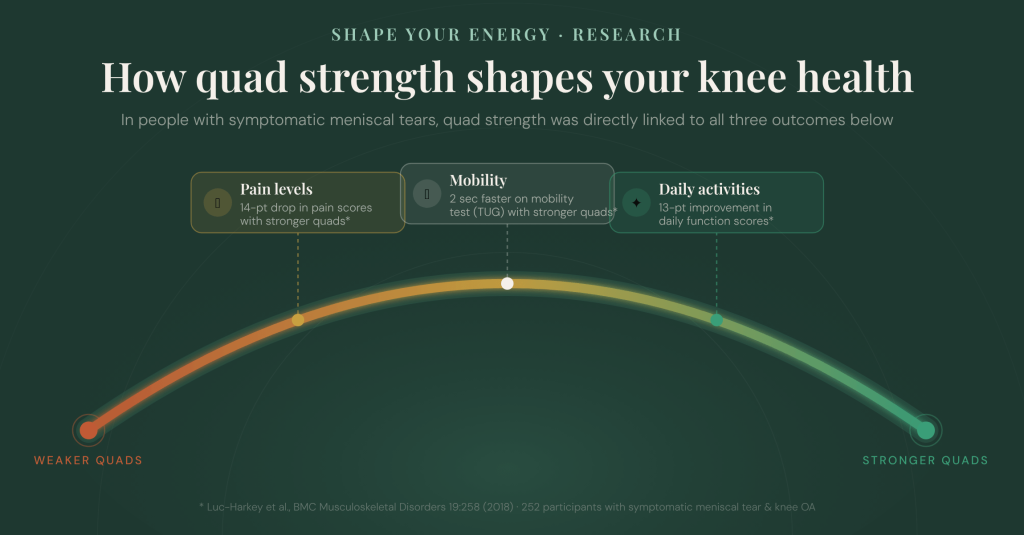
    Quad strength is directly associated with pain levels, mobility, and quality of life in people with symptomatic meniscal tears. The same goes for those with knee osteoarthritis, according to a 2018 study published in BMC Musculoskeletal Disorders

    Simply put, strong quads translate to better mobility, less pain, and greater ease with daily activities, from getting out of a chair to carrying groceries up the stairs. 

    And, as the researchers note, the gap in pain and daily function between the strongest and weakest participants crossed the threshold for clinical significance, meaning it was meaningful in the real world, not just on paper.
    Why quad strength matters


    Reduced quadriceps strength not only affects knee function after a meniscus injury but also increases the risk of knee osteoarthritis

    When the quads are weak, the joint absorbs more load with every step, and, over time, that extra stress can accelerate wear on the cartilage. Strong quads don’t just help you move better today but also help protect your knee in the long run.

    And here’s a sobering finding from a study conducted on 45 post-meniscectomy patients: even a 9% deficit in quad strength (measured four years after surgery) was linked to significantly worse self-reported knee function, more pain, and a lower quality of life. 

    The researchers emphasized that restoring muscle strength after any meniscus intervention should be a clinical priority. Yet, it often isn’t. Many patients are sent home with a basic exercise sheet and little follow-up. 

    Strength Training Is Medicine—and the Science Backs It Up

    Structured exercise can match knee surgery in outcomes for degenerative meniscus tears. And that exercise, whether it’s physical therapy (PT) or a well-designed training program, almost always includes squats and other movements targeting the quads. 

    • For example, a landmark study featured in the New England Journal of Medicine found no significant difference in functional improvement between patients who had arthroscopic surgery for meniscus tears and those who underwent PT at six months and beyond. 70% of the physical therapy group didn’t need surgery at all.

    • In a clinical trial published in JAMA, physical therapy was just as effective as arthroscopic partial meniscectomy for improving knee function over 24 months. Even more compelling, a five‑year follow‑up confirmed that the results held steady long‑term.

    • A similar randomized controlled trial in the BMJ backed this up with two-year data. 140 middle-aged adults with MRI-verified degenerative meniscal tears were randomly assigned to either a 12-week supervised exercise program or arthroscopic partial meniscectomy.

      After two years, the difference in outcomes between the groups was negligible. Basically, structured exercise performed just as well as surgery.

    • A smaller study published in the Journal of Orthopaedic & Sports Physical Therapy reported similar outcomes. Middle‑aged adults with degenerative meniscus tears completed a 12‑week exercise therapy program that included leg presses, single‑leg squats, knee extensions, and other strength movements targeting the quadriceps and hamstrings. 

    By the end of the program, all participants increased quadriceps strength, 19 out of 20 rated themselves as “better” or “a lot better,” and most maintained those gains at the one-year mark. 

    These findings confirm that targeted strength training isn’t just safe but also highly effective. While it’s not a cure‑all and won’t work for every single case, it can make a meaningful difference in flexibility, pain perception, range of motion (ROM), and overall functional fitness.

    The Squat Is Part of the Solution

    A controlled, modified squat is essentially a quad-strengthening exercise that mimics fundamental movement patterns of daily life: sitting, standing, climbing stairs, and getting in and out of a car. Done correctly, it strengthens the muscles that protect your knee in the exact positions your knee needs protecting.

    The University of Washington‘s orthopedic department recommends quad exercises and mini-squats (knees bent to 15 degrees) as early interventions to prevent muscle atrophy and maintain stability after a meniscus tear. 

    And, as the scientists point out, these movements “can help prevent some of the secondary effects of a torn meniscus, such as kneecap pain or the sense of buckling.”

    The key words there are correctly and modified, which is exactly what we’ll get into next.

    How to Squat with a Torn Meniscus Without Making Things Worse

    Squatting with a meniscus tear requires extra caution, but with a few small tweaks, you can do it safely and amplify the benefits. 

    As a rule of thumb, start light and progress slowly. Begin with bodyweight and wall squats, move to resistance band squats, then gradually add load—10 pounds, 15, 20, and so on.

    Yes, this will feel too easy if you’re used to lifting heavy. Do it anyway. At this point, it’s better to focus on what you can do, even if it seems very little, rather than being sidelined with pain because you pushed too fast, too soon.

    Without further ado, here’s how to squat safely with a torn meniscus:

    Start with Bodyweight Squats

    Resistance band squatWeeks and sometimes months after a meniscus injury, your knee simply isn’t ready for heavy loads. It’s already managing your bodyweight, which is often enough to stress the meniscus during walking and everyday activities. Adding too much load too soon is how setbacks happen.

    Start with bodyweight squats and progress gradually, working through the following, roughly in this order:

    • Resistance bands or booty bands
    • Kettlebells, dumbbells, or weight plates
    • Gym machines (the hack squat machine)
    • Barbells

    In the early stages, aim for 10–15 reps and pay attention to how your knee responds—not just during the set, but also the next day. As you add weight, work within the 8–12 rep range.

    And if you can only manage 4–5 reps without pain? That still counts. That is progress. 

    A few clean reps will do more for your recovery and overall fitness than forcing a heavier weight with poor form.
    Fire Up Your Quads with Front Squats

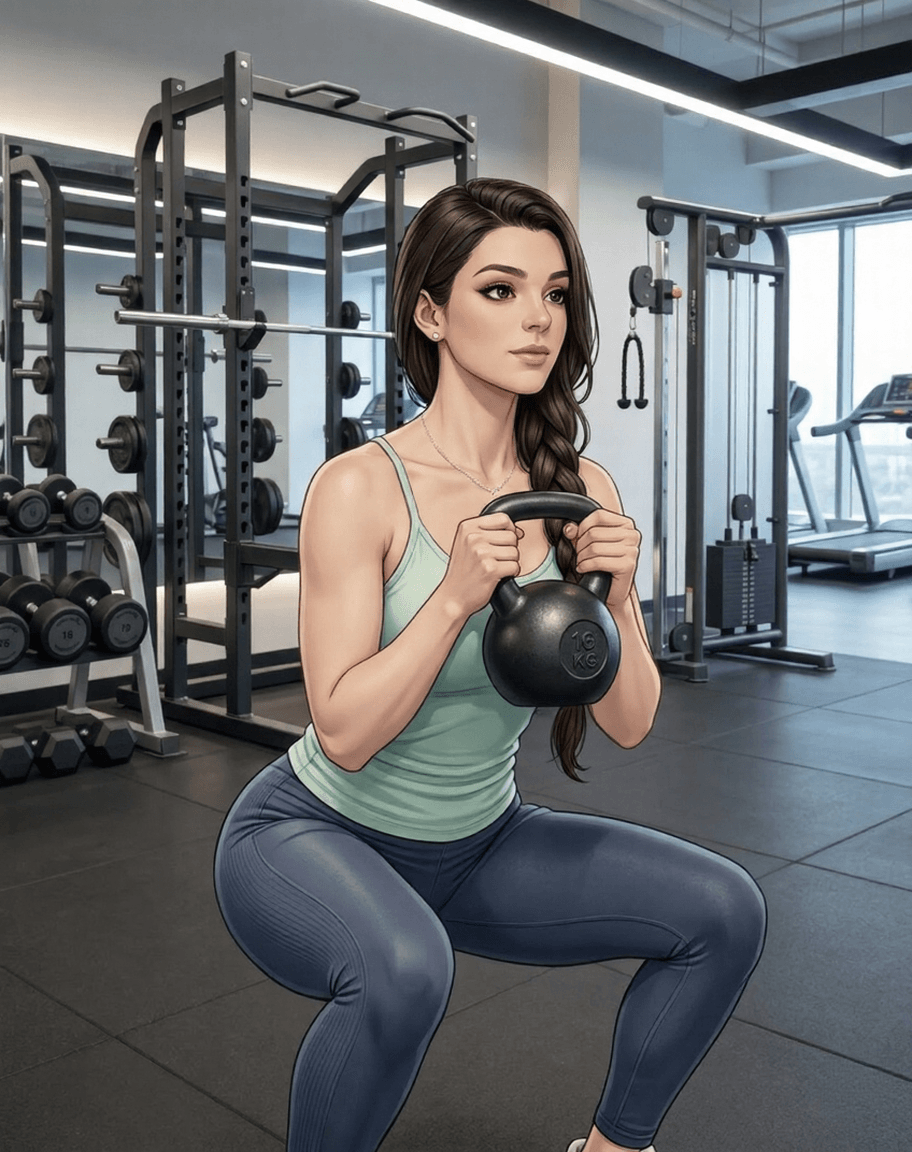
    Goblet squat
    Front squats require a more upright torso, which can improve knee flexion and stability over time. They also shift the load forward, forcing your quads to work harder than they would in a back squat. That’s exactly what you want when rebuilding strength around an injured knee.

    Research confirms that front squats place less stress on the knee joint than back squats while recruiting the same major muscle groups. 

    Since they reduce joint loading without sacrificing muscle activation, they may be better for people with meniscus tears or other knee issues and those prioritizing long-term joint health.

    Once you can squat without pain, begin experimenting with front-loaded variations. Here are some good options:

    • Goblet squat
    • Resistance band front squat
    • Dumbbell front squat
    • Kettlebell front squat
    • Landmine front squat
    • Zercher squat

    Not sure where to start? Hold a weight plate across your chest as you squat. It’s a simple way to feel the front-loaded position before committing to a specific variation.
    Elevate Your Heels to Increase Quad Engagement

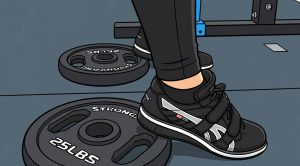
    Squats with elevated heelsPlace your heels on small weight plates (2.5 or 5 lbs) to shift the load forward and drive more work into the quads. If you squat regularly, consider getting a pair of squat wedges or Olympic weightlifting shoes, which have a built-in heel raise.

    Either way, the effect is the same: a more upright torso, greater quad engagement, and less strain on the lower back.

    Heel‑raised squats can also help if you have limited ankle mobility. Instead of compensating with a forward lean, elevating your heels lets your body sit into the squat more comfortably. 

    Strengthen Your Quads and Knee Joints with Isometric Squats

    Wall squatsSquatting with a meniscus tear can be painful at first, but it becomes easier as you build quad strength. One way to do that is to perform isometric squat holds, such as wall sits, daily or every other day. 

    Isometric squats strengthen your quads, hamstrings, glutes, and knee joints without the high-impact stress of moving through a full range of motion, making them ideal for an irritated knee. As an added benefit, they engage your core muscles, leading to better overall fitness. 

    The execution is simple: get into a squat position and hold. Start with 20–30 seconds and work your way up to a full minute as your strength and endurance improve. Aim for three to five sets with about 60 seconds of rest in between.

    To make it harder, hold a weight plate, dumbbell, or kettlebell at chest level. Another option—and one that works particularly well in my experience—is wrapping a resistance band around your thighs and pressing outward against it throughout the hold. 

    As a general rule, save isometric holds for the end of your workout, when your leg muscles are fatigued. Think of them as a finisher—a final push that fully empties the tank on your quads, glutes, and hamstrings.

    Avoid Deep Squats If You Have a Torn Meniscus

    Half squat
    While
    safe for healthy knees, deep squats can worsen pain and cause further damage in case of a torn meniscus. The deep bending motion increases pressure on the knee joint, compressing the meniscus and other delicate structures. 

    Lower yourself until your thighs are roughly parallel to the floor so you can perform the movement without overloading the injured tissue. That’s a half-squat, and it can be just as effective as a deep squat if done correctly.

    Squatting with a Meniscus Tear Can Help Your Recovery

    A torn meniscus isn’t a life sentence. Unless your injury is fresh or severe, or you experience constant knee locking, you can keep up with your workout routine.

    If you’re concerned about squatting with a meniscus tear, take the path of least resistance. Begin with bodyweight squats, perform only as many reps as your knees can handle, and increase the load gradually.

    One thing to keep in mind: no matter how much experience you have in the gym, a knee injury changes the game

    Be prepared to relearn how to train, adjust your routine, and adopt a beginner’s mindset. Your old ways of doing things simply won’t hold up anymore—and that’s one of the hardest lessons I’ve learned through my own recovery.

    FAQ: Back to Squatting After a Meniscus Tear

    In most cases, yes—but with modifications. Unless your injury is acute, severe, or causing your knee to lock, you should be able to squat safely. The key is adjusting your depth, load, and technique to reduce stress on the meniscus while still building quad strength. 


    Consistency matters, too. Training your legs at least twice a week is far safer and more effective than doing it sporadically. A routine allows your knee to adapt, strengthen, and stay more resilient over time.

    Pay attention to two things: what you feel during the squat and how your knee feels the next day. Some discomfort during a modified squat is normal, whereas sharp pain, swelling, or a catching or locking sensation is not. 


    If your knee is noticeably more swollen or painful the day after squatting, that's a sign you did too much, too soon. Dial back the depth or load and rebuild from there.

    Stop where your thighs are roughly parallel to the floor and your knees bent to about 90 degrees. Going below parallel increases compression on the meniscus and surrounding structures, which can trigger or worsen pain. As your strength and comfort improve, you can reassess range of motion, but for most people squatting with a meniscus injury, parallel is the safest limit.

    Generally, waiting is counterproductive for degenerative or partial tears. Inactivity weakens the quads, which puts more strain on the joint—the opposite of what you want. Modified squats are often part of how the knee heals and stabilizes. 


    That said, if your tear is fresh, severe, or post-surgical, follow the timeline your doctor or physiotherapist has given you before reintroducing squats.

    Yes, squatting with a meniscus tear can be risky if done incorrectly. Deep squats, heavy loads before your knee is ready, and poor technique (e.g., knees caving inward) can all aggravate the injury. 

    It depends on the severity of the tear and whether you’ve had surgery. For conservative (non-surgical) management, gentle bodyweight and wall squats can often be reintroduced once the initial pain and swelling have settled—sometimes within a few weeks.


    After a meniscus repair, most surgeons recommend waiting at least four months before squatting under load. 

    The answer depends on who you ask. One orthopedic surgeon told me to train legs for 50 minutes twice a day, every day, which, for most people, is a lot. 


    Generally, physical therapists recommend leg work—squats included—at least twice a week. That's the approach I took, and it worked well for me.

    A compression sleeve can help reduce swelling and provide a sense of stability during squats. A rigid brace that locks the knee isn’t ideal for exercise, as it restricts the natural movement your knee needs to recover and get stronger. If you're unsure, ask your physical therapist for guidance. 

    Prioritize front-loaded variations like goblet squats, dumbbell front squats, and kettlebell squats, which encourage an upright torso and reduce compressive forces at the knee joint.


    Wall squats and box squats are also great options because they let you control your depth, build confidence, and stay within a safe range of motion. Adding a slight heel elevation (using squat wedges or weight plates) can further reduce joint stress while increasing quad engagement. 

    Squatting won’t repair torn cartilage, since the meniscus has a limited blood supply and doesn’t regenerate the way muscle does.


    What squats can do is strengthen the muscles that support and protect the knee, resulting in less pain and improved function over time. Think of it less as healing the tear and more as building the resilience around it.

    Mild discomfort, such as a dull ache or muscle fatigue, during a modified squat is fairly common, especially early in recovery.


    What's not normal is sharp or stabbing pain at the joint line, a catching or popping sensation, or swelling that develops during or after the session.


    If you experience any of those, stop and reassess. When in doubt, go lighter, reduce depth, or switch to isometric holds until the irritation settles.

    Yes—though "normally" might look a little different than before, and that's not necessarily a bad thing. 


    Many people with a meniscus tear return to full squatting over time, especially with consistent quad strengthening and a gradual progression in load and depth. Some find they're actually squatting with better technique than before the injury because they were forced to slow down and do it right. 


    Recovery timelines vary depending on the severity of the tear, your age, and how consistently you do the work. Focus less on getting back to where you were and more on building a knee that's resilient enough to handle whatever comes next.

    Eat simple. Move smart. Recover better.

    Let me help you shape your energy. Together, we’ll create a personalized training, nutrition, and lifestyle plan tailored to your body and goals.
    Scroll to Top
    0%